
This is an edited extract from Plant Parenting for Busy People by Dr Nora Mutalima, published by Affirm Press.
Taking care of house plants does not need to feel like a full-time job. Even with a hectic schedule, it is absolutely possible to maintain healthy, thriving plants by putting a few simple strategies in place:
Start with resilient varieties
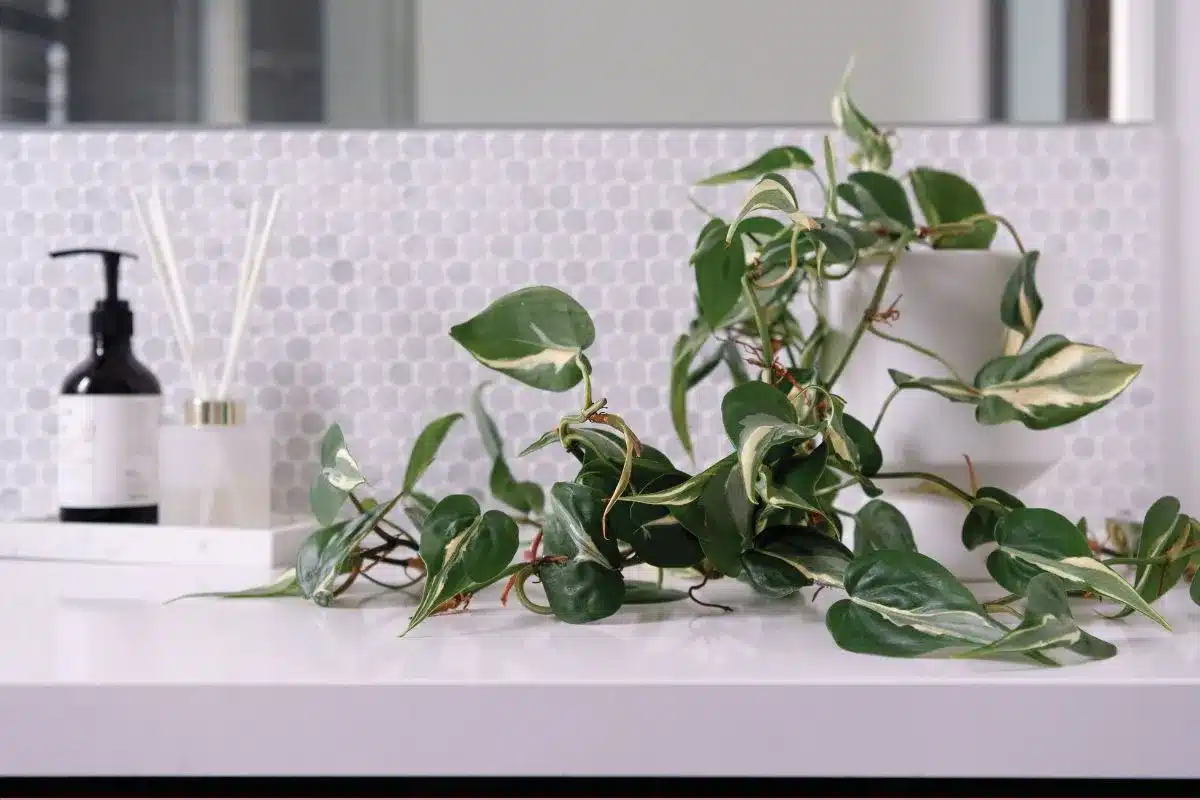
If you are just getting started or know that your life gets busy, choose plants that are easy to care for. Some plants are simply more forgiving than others. Pothos, philodendrons, hoyas and monsteras are great options. They tolerate a bit of neglect and bounce back easily if you miss a watering or two.
These are the kinds of plants that can handle everyday life and still thrive. Once you build confidence and understand your space better, you can branch out and try some of the more demanding plant types. Starting with resilient varieties sets you up for success right from the beginning.
Group similar plants together
One of the biggest time-savers is grouping plants by their care needs. I like to organise my plants based on their light, water and humidity requirements. I keep my thirsty plants like peace lilies and spider plants in the same area. I also group my fussier plants, like ferns and calatheas, together.
Doing this simplifies care because I know exactly what each group needs without having to follow a different routine for every plant. For example, I know that the plants next to the window in my study need watering every week, while the group in my living area only needs water every two weeks.
Set reminders
If you are like me and can barely remember what day of the week it is, set reminders. I use my Google Calendar for everything. It helps me keep track of when I last treated my plants for spider mites and when the next spray is due.
I would be utterly lost without it. Reminders ensure essential tasks like watering, fertilising and pest control do not fall through the cracks when life gets busy, which it always does.
Use a plant care calendar
A weekly or monthly plant care calendar can help you stay organised without having to constantly remember what needs to be done. You can plan out simple tasks like pest checks, pruning or wiping leaves.
This takes away the mental load. All you need to do is follow the calendar and take action. No need to replan every few days.
Use self-watering pots
Self-watering pots have been game-changing for me. They are especially helpful for plants that do not tolerate dry conditions, like ferns and calatheas. As long as there is water in the reservoir, I know the plant will take up what it needs.
It buys me time. A plant that normally needs water every week might only need topping up every two weeks. That’s an absolute win in my book.
Automate where you can
Automated systems for watering and lighting are brilliant time-savers. Most of my grow lights are connected to timers. They switch on in the morning and turn off in the evening without me having to think about it.
No matter how busy I am, my plants still get the light they need.
How to make your living room bloom
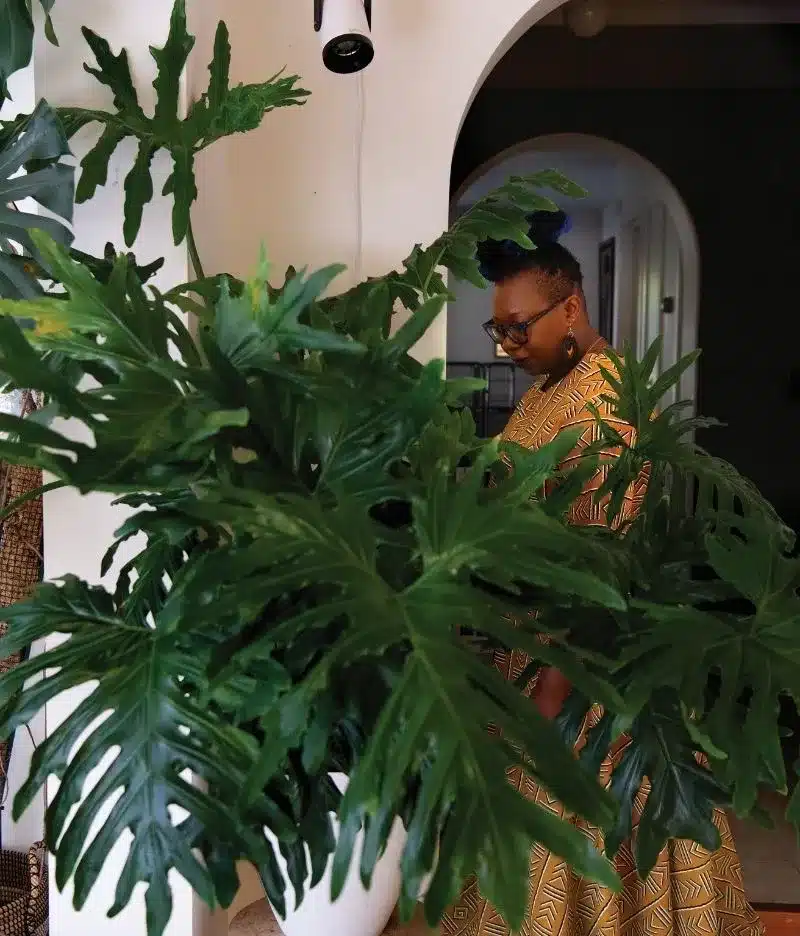
The living room is often the heart of the home. It is where people gather, relax and spend time together, and it is one of the best places to bring in plants. They add warmth, texture and style, and help soften the space.
Depending on your window placement and coverings, living rooms usually get medium to bright light, which means you have a lot of options when it comes to choosing plants.
In my living area, I’ve played around with a mix of statement plants and trailing ones. I also use stylish floor lamps with grow lights tucked inside so I can grow a wider variety of plants without disrupting the look of the room. If you choose the right lighting, you can keep your plants happy and still stick to your aesthetic.
Plants for low to medium light
- Peace lilies (Spathiphyllum spp.): Add elegance and thrive in indirect light.
- Parlour palms (Chamaedorea elegans): Create a tropical vibe without overwhelming the space.
- Philodendron brasil plants (Philodendron hederaceum ‘Brasil’): Work well on shelves or hanging planters.
Plants for bright light
- Fiddle-leaf figs (Ficus lyrata): A dramatic and eye-catching centrepiece.
- Crotons (Codiaeum variegatum): Provide a burst of vibrant colour.
- Succulents: Easy to maintain and perfect for sunny spots.
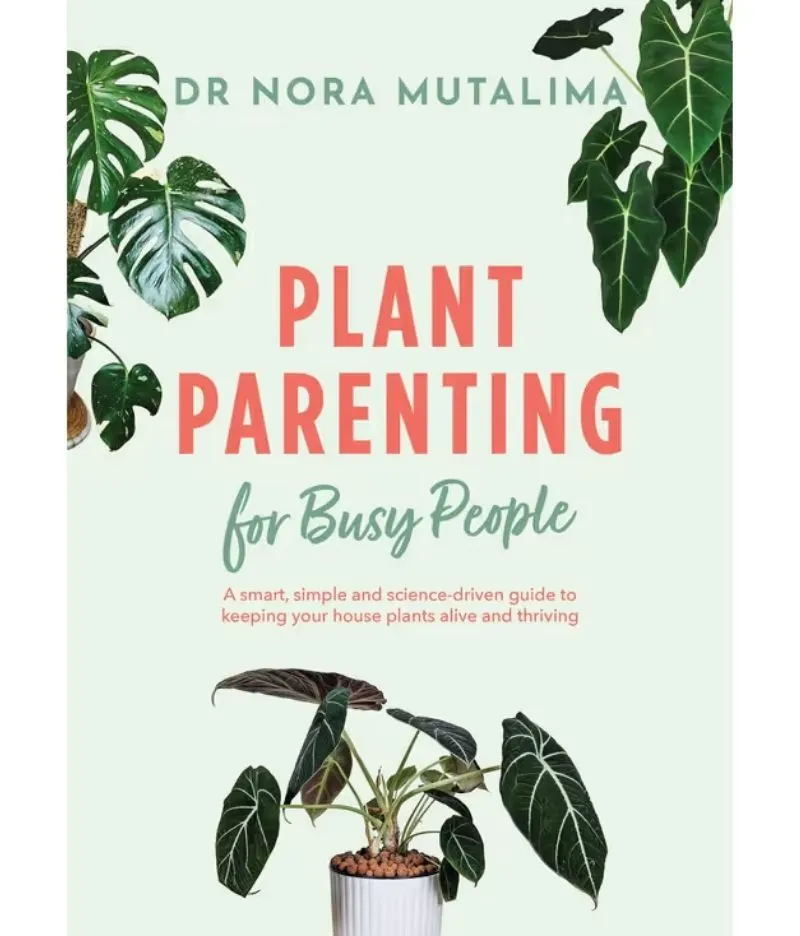
Medical doctor and passionate plant lover Dr Nora Mutalima offers a simple, science-driven guide to creating your own indoor jungle and keeping it thriving with minimal effort.
Plant Parenting for Busy People
Dr Nora Mutalima
RRP $39.99
Affirm Press