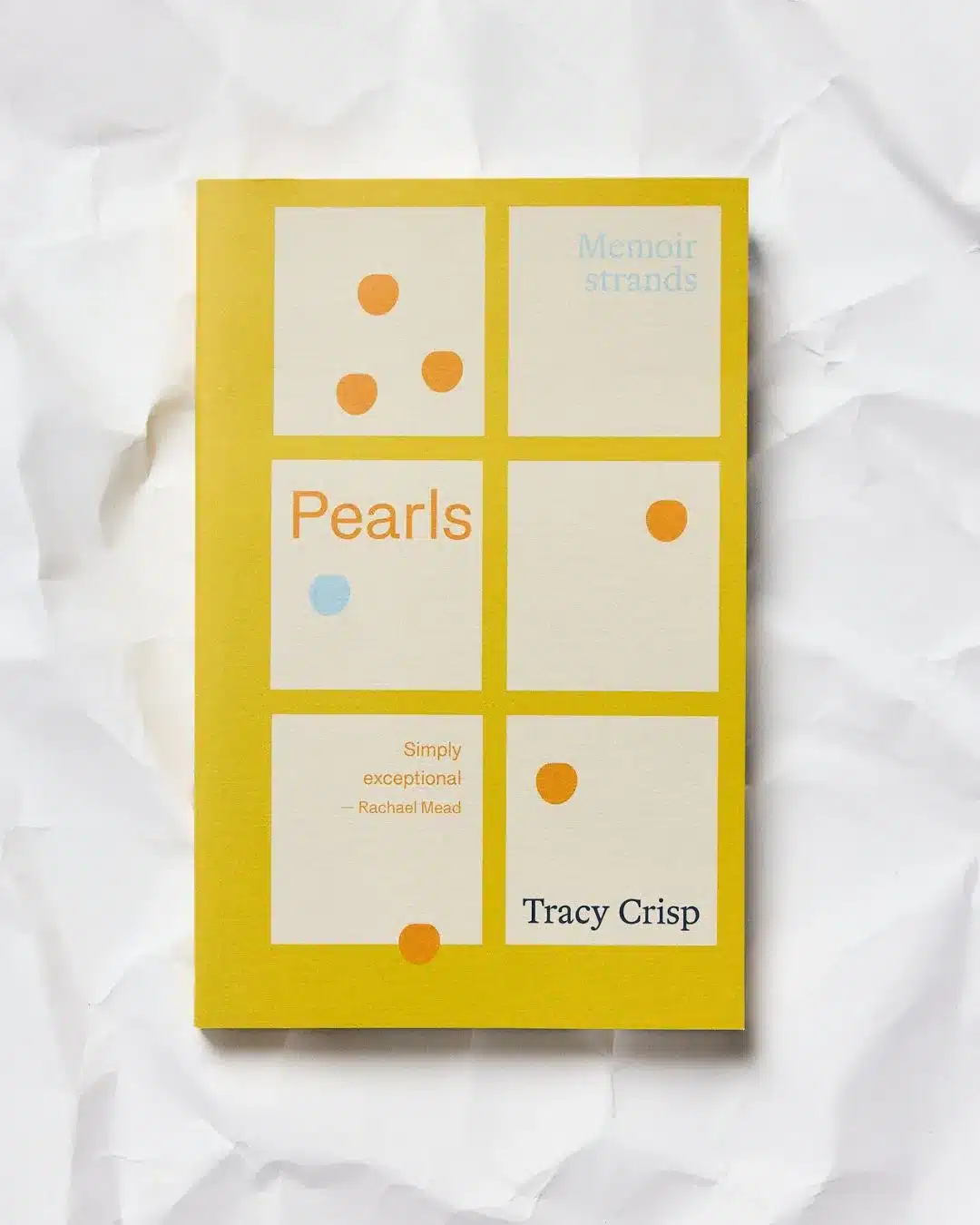
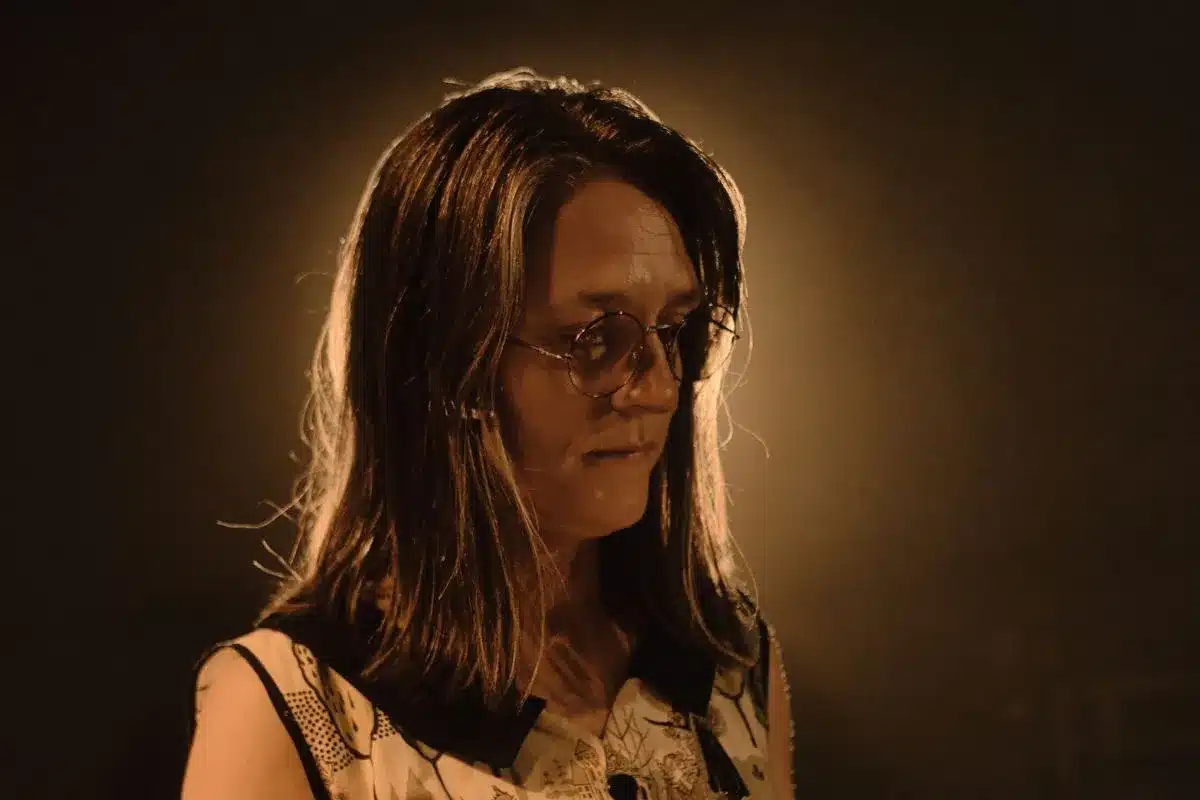
Tracy Crisp is a writer and funeral celebrant, but is perhaps most known as a Fringe performer. Her most recent book, Pearls, out with Pink Shorts Press, is based on her six award-winning memoir monologues and deals with grief, ambition and coming-of-middle-age.
This is an edited excerpt from a chapter about her beloved grandfather.
A few weeks after my mother’s funeral, my grandfather wrote to me. ‘I am writing this letter from the car,’ my grandfather began. ‘Because it’s the warmest room in the house.’ This was typical of him, a pragmatic man with a sharp but subtle sense of humour. Less typical though were the next words about his wife and daughter, both now dead: ‘I hope you know what you mean to me, dear. You are Joyce and Vivienne and you.’ I felt a change come over me, something like an ageing, but also something more. I had become three generations of woman in one.
My grandfather, Pa, was born in 1916, the descendant of Cornish miners who had migrated to South Australia’s Yorke Peninsula. He was given a grand collection of names, George William Cole Lyne, but he was always known, somewhat less grandly, as Bill. His courtship with my grandmother, Joyce, was rushed by the war and it wasn’t until after his officer’s training that they had a chance to put their wedding clothes back on and have a portrait taken.
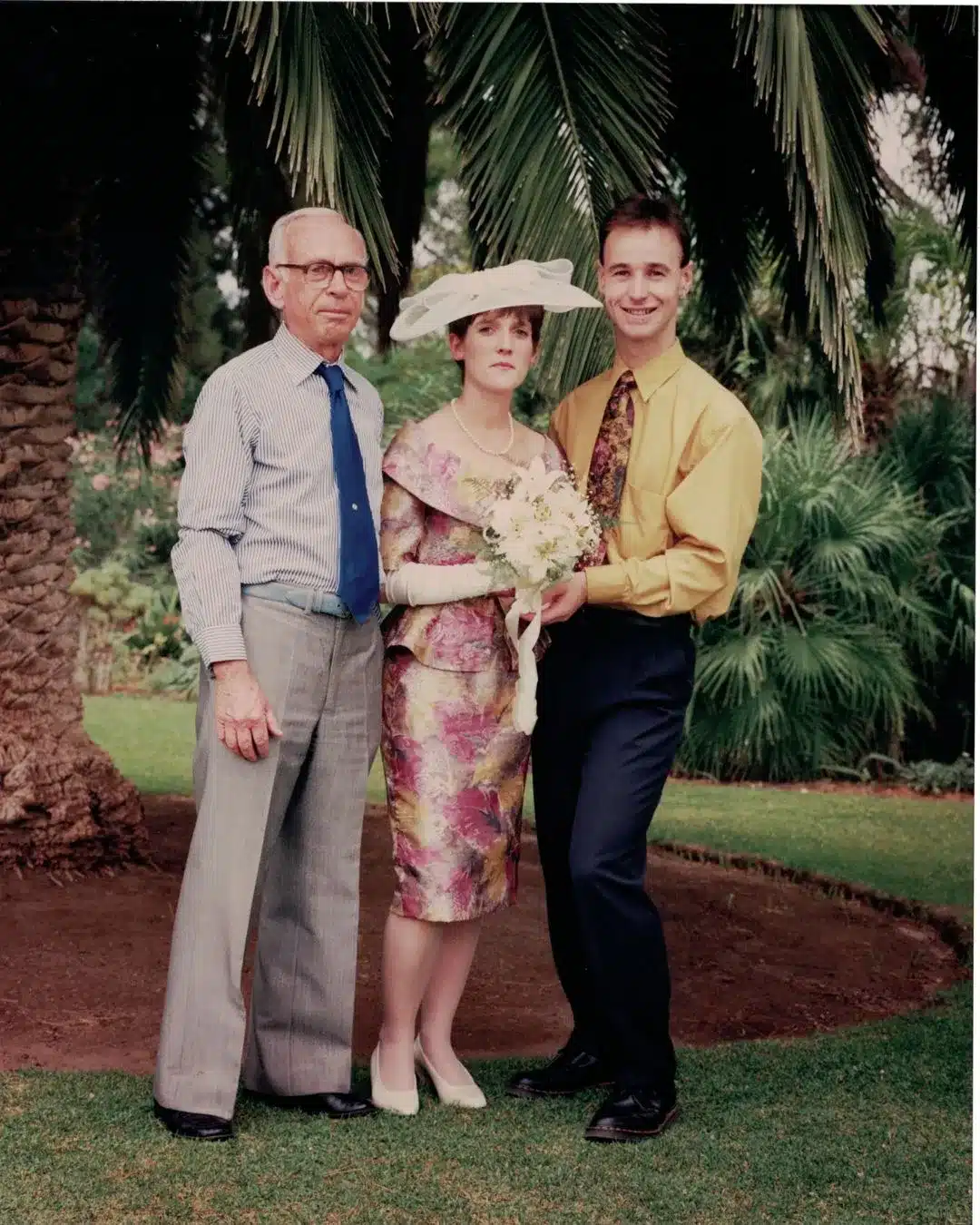
That portrait stands a symbol of Pa’s strong sense of the need to preserve the past and bolster our collective memory. Over his lifetime he volunteered thousands of hours for the National Trust and local historical societies, not only as an accountant but also as an excellent amateur photographer. He travelled around the state in his golden-yellow Torana taking countless slides and photographs of monuments, landmarks and significant sites, from the rock formations at Hallett Cove to the fossils at Parachilna. He also documented many of our state’s flowers, birds, grasses and trees. I see your boring family slide night and raise you the flowering structures of every species of the genus eucalyptus.
In the year I got my first camera for Christmas, Pa came with us on a family trip to Kangaroo Island. As I learned to point-and-shoot, Pa would stand behind me asking, ‘Is this a simple snapshot, dear, or is it a photograph of record?’
At first, it was another in his standard line of jokes. ‘How are you, Pa?’ ‘I’m very well, dear. As far as I can remember.’ He had outlived both his children by then, as well as his wife, and appointed me to be his guardian and gave me power of attorney, ‘In the event that it is ever required.’ He gave me increasingly frequent gifts of fifty-dollar notes because, he said, ‘I must have forgotten your birthday several times by now.’ Fearful of the home invasions he read about in our local newspaper, he had a burglar alarm installed, but he could never remember the code. We convinced him to write it in the front of his diary. It was 1. The anecdotes and incidents added up.
I knew that he had given me the legal authority to intervene, but it was more difficult to convince myself that I had the natural authority. That was my mother’s place. Until one day, I took Pa to the doctor for his flu shot. We were sitting in the waiting room when he said: ‘And just remind me, dear. Who are you?’ ‘I’m your granddaughter. I’m Tracy.’ ‘Ah, yes.’ ‘Did you forget who I am?’ ‘No. No, I knew you were important to me, it’s just my memory, dear.’
The crisis of it came as it so often does, after a fall. At our house. On Christmas Day. Pa slipped on a gumnut that had fallen from one the trees that lined our street. On Boxing Day, my aunt and I took him to the repat hospital. He never went back to his home again.
As we waited for Pa to recover and for more permanent accommodation to be found, I visited as often as I could. Each time I walked into the ward, Pa would be sitting, his bed made, his case packed. ‘Oh, there you are, dear. I was just wondering whether I should get them to call you. To let you know that I am ready.’ I explained things again. He listened. He understood. And then, one day, he knew. I watched as he took his handkerchief out of his pocket, took off his glasses and wiped at his eyes. It was the second time in my life that I saw him cry. ‘I got old, dear.’ That moment. Its intimacy. Its fragility. Its power.
There was so much that we didn’t tell him. His house had been sold, my father had died, we were moving overseas. Was it better or worse to keep things from him? For the six weeks each year we were in Adelaide, we visited Pa every day. ‘Oh, hello dear. Well, you’re a sight for sore eyes.’ He said this whether it was our first visit home or we had seen him the day before. ‘How are you, Pa?’ His hugs grew stronger as he grew more frail. ‘Oh, I’m very well, dear. I can’t complain. The only thing that troubles me is my memory. Well, that’s not strictly accurate because I no longer have a memory. I have a forgettory.’
This forgettory was more unrelenting, more tormenting than anything that any vengeful god has made. It never forgot a question, but never remembered the answer. A memory is an ally, a forgettory is a foe.
Some days it felt as if Pa might live forever. Ninety-four, ninety-five, ninety-six.
I now relied almost entirely on the photo album that he made for our family some years before. Together we turned the pages on this parade of ancestors. His grandparents, uncles, aunts, father, mother, sisters. One day, he pointed to a photograph of himself and said, with tenderness and a smile, ‘Billy.’ ‘Is that what they used to call you?’ He nodded and looked at me. ‘Mother,’ he said.
If I had been three, Joyce and Vivienne and me, I felt myself becoming even more. One woman can be two, three, four. He filled me with them all. I wanted to speak. I wanted to ask him who he saw. But my need was simply to satisfy this mix of curiosity and ego. I was quiet. I did not want to steal his peace, his hard-earned clarity.
In this moment, his forgettory was not his enemy, it was his greatest friend. When all else is forgotten, this is what is left. This deep and certain knowing. He is loved.
Pearls: Memoir strands Tracy Crisp RRP $32.99 Pink Shorts Press