

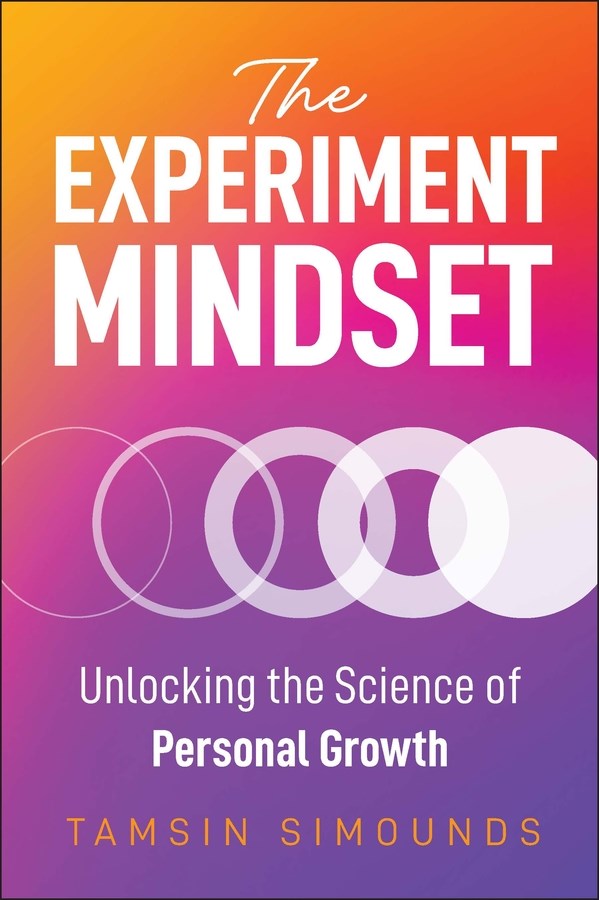
In this extract from The Experiment Mindset, Adelaide author Tamsin Simounds explores why stress isn’t always the enemy we think it is and how the right kind can sharpen performance and support personal growth.
While stress can feel like the ultimate energy drain, it can actually serve as a powerful catalyst for personal growth. Not all stress is bad, and growth is possible if you’re stressed. While most of us associate stress with negative outcomes such as burnout, anxiety or overwhelm, it can also be an adaptive force that shapes our potential for growth. Psychologists now call this the ‘stress paradox’, and you just need to be able to distinguish which type of stress you’re experiencing so that you know what to do with it.
Productive stress
Biologically, humans have evolved with a stress response for a reason. It triggers you to take notice of a problem that needs attention, and it motivates you to respond, take action and adapt. In her book The Stress Paradox: Why You Need Stress to Live Longer, Healthier and Happier, Dr Sharon Bergquist argues that mild, intermittent stressors – for example, running experiments that stretch you – are essential for activating the body’s repair and adaptation systems. Dr Bergquist prescribes ‘microdosing discomfort’ – that is, encouraging small, consistent exposures to discomfort to build physiological and psychological resilience. This short, focused and productive stress temporarily sharpens the brain. It increases focus and motivation, along with the neural activity that helps you encode new information. This kind of stress adds to your energy body budget and supports your growth rather than inhibiting it. However, the next two types of stress don’t.
Hypostress
Although discussed more rarely, the first of these negative types of stress is actually relatively common. This stress is ‘hypostress’, or the stress of understimulation and a lack of challenge. Yes, boredom can stress you out. Your system needs a certain level of stimulation, challenge and engagement to stay regulated. When that stimulation drops too low, your brain doesn’t relax; it becomes restless. You become more distractible, less able to focus, more irritable and more prone to rumination. This stress isn’t the productive kind that sharpens your attention and growth potential. It’s the flat, agitated kind that comes from having nothing that feels purposeful to direct your energy toward. You don’t just get stressed from being busy. You can get stressed from being not busy enough, or being the wrong kind of busy.
Hyperstress
This is a sense of overwhelming pressure, and a feeling that you’re being stretched so thin that the demands of your life have overtaken your ability to cope. Many of us live here, juggling competing priorities, never feeling like we’re getting on top of things, looking calm on the surface but drowning inside. This kind of stress drains your body battery, steals your focus and gets in the way of your growth. If this is raising a red flag for you, it’s your signal that your limits are being tested and you need to lean in and listen to your body. It’s time to pause and make adjustments.
When it comes to stress, some things are outside of your control, however, you can grab hold of certain things, such as prioritising tasks and laying the right foundations for your physical wellbeing so that you can create capacity. In doing so, you can recharge your own body battery.
Ready to give it a go? Pick up a copy of The Experiment Mindset.
Follow Fifty+SA on Instagram and Facebook, and subscribe to our weekly newsletter.