The Heartbreak Choir comes to the stage with a notable history as the final completed work by Australian playwright Aidan Fennessy. Commissioned through the Melbourne Theatre Company’s NEXT STAGE Writers’ Program, Fennessy finished the script while living with terminal cancer prior to his passing in 2020, with its planned debut delayed by the pandemic until 2022. Crucially, unlike a conventional musical, which is built through collaborative workshops and routinely reshaped during previews, this is a straight play woven with existing songs. As a result, its dramatic architecture was locked on the page by Fennessy as sole author before the piece ever entered a rehearsal room. That lack of a live testing phase proves problematic: had Fennessy survived to see the play through a week of previews, one suspects he would have made significant cuts and structural changes to what remains a rather unwieldy script.
In its DNA, The Heartbreak Choir sits firmly in the tradition of classic British ensemble dramedies akin to Richard Harris’s Stepping Out and Nell Dunn’s Steaming. Like those staples of the stage, Fennessy gathers a disparate group of everyday locals in a humble community space, here, a poorly ventilated Country Fire Authority Hall, using a shared pastime to peel back private grief, small-town tensions, and quiet resilience. However, while Harris and Dunn deftly balance broad comedy with sudden emotional weight, Fennessy’s script struggles to keep those gears meshing smoothly.
The main structural flaw is an abrupt, jarring tonal shift that disrupts the play’s momentum and splits it in two. Much of the piece operates in an affectionately comic register reminiscent of Robert Harling’s Steel Magnolias. If these quirky regional Australian women were American, you could easily picture them swapping banter in Truvy’s beauty salon before heading to choir practice. Without warning, however, that breezy, character-based comedy pivots sharply into devastatingly tragic territory, introducing heavy trauma, including suicide and historical church abuse, carried largely by a pair of grief-stricken male characters. Rather than feeling organically woven into the fabric of the story, their weighty backstories sit uneasily alongside the lighter ensemble banter, landing like a different play altogether.
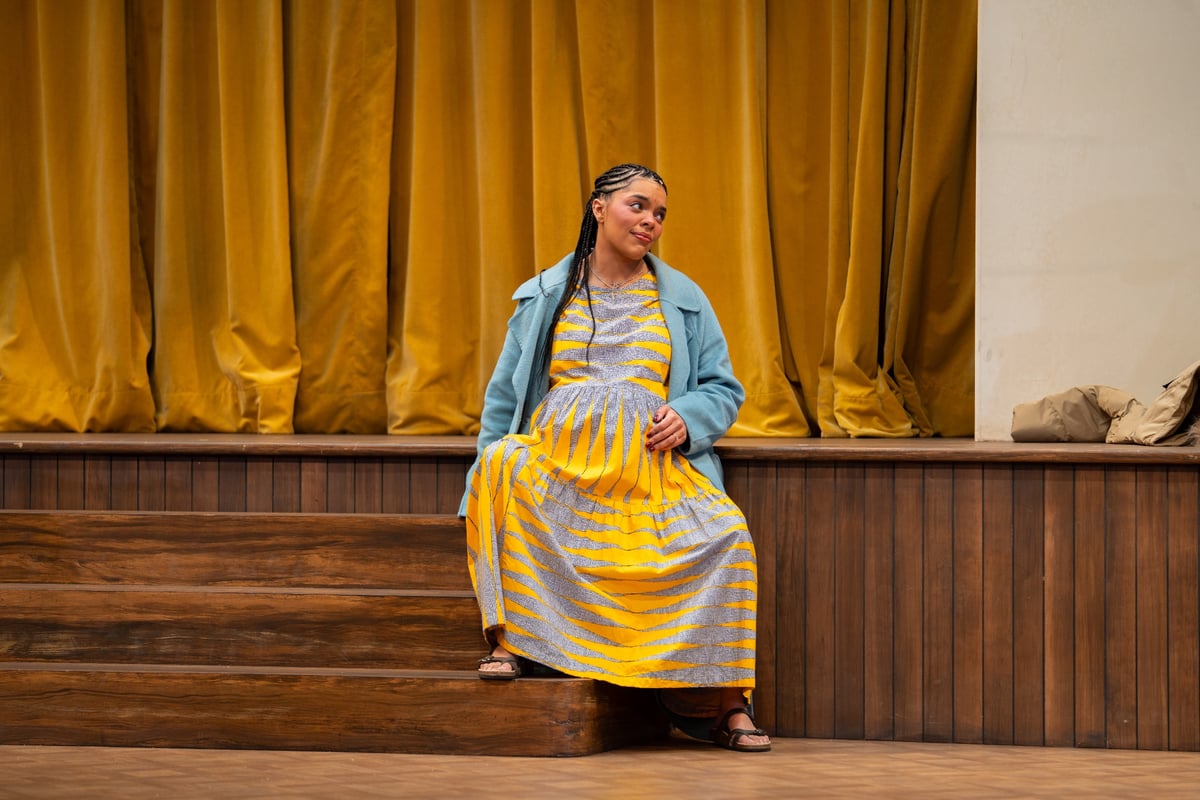
Ultimately, this unedited text is itself an example of the unfinished business that follows an untimely death and long-held, life-changing secrets. Left untouched out of sentimental respect for the late playwright, the script stands as an imperfect monument to his career. In a telling, if unintended, parallel, the play’s characters operate within a similar mist of denial regarding why they broke away from their original town choir in the first place. Though they formed their splinter group in honour of a woman beaten down by the circumstances of her life, they mask the real catalyst behind a veil of grief, shame, denial and small-town politeness. That avoidance reflects rather poorly on them, particularly once it is revealed that their ranks include a doctor, Aseni (Lucia Rose Franks); a psychologist, Barbara (Genevieve Mooy); a wealthy local patron, Totty (Emily Taheny); and farming mother-and-daughter duo Mack (Libby O’Donovan) and Savannah (Billie-Rose Russell), all of whom should arguably be better equipped to confront the truth rather than not.
When one notices and admires the authentic detail of Meg Wilson’s set, right down to the obligatory framed portrait of a young Queen Elizabeth II hanging on the hall wall, it is hard not to consider the glaring absence of any tribute to Caro, the deceased friend whose suicide triggered the choir’s split in the first place. While the monarch watches over their rehearsals from on high, the very woman in whose honour the splinter group supposedly formed remains conspicuously invisible, reinforcing the quiet denial that hangs over the room.
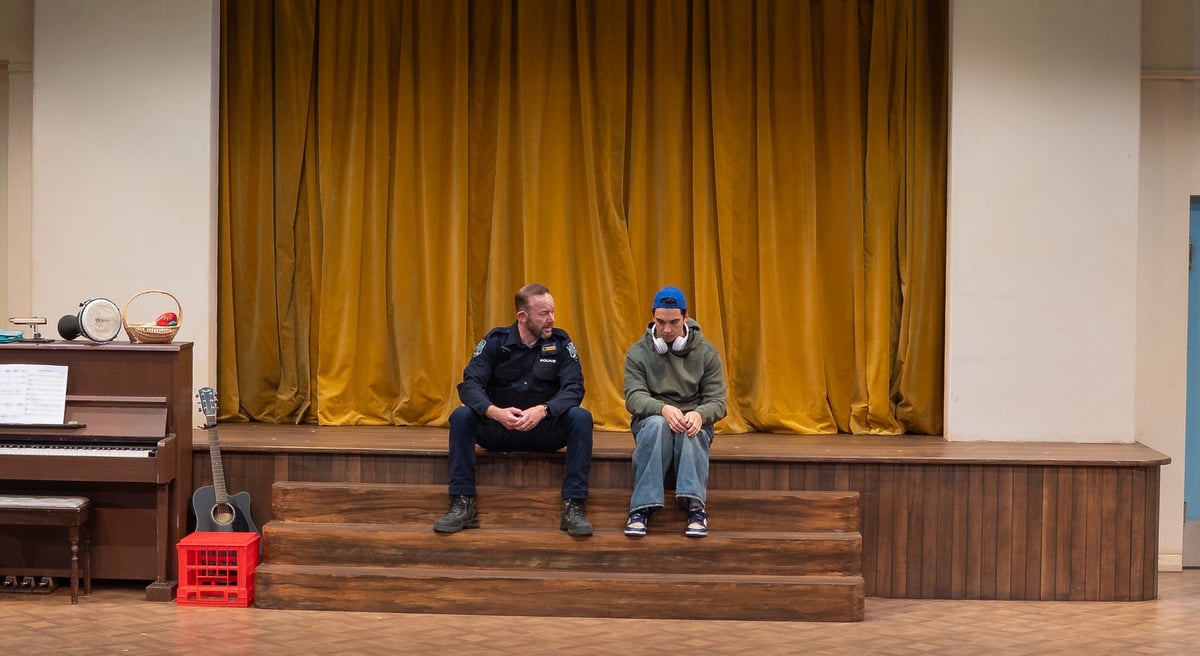
Then there are the men: Caro’s surviving husband, local police officer Peter (Mark Saturno), and his son Beau (Darcy Wain), who are at once the most compellingly interesting characters inside the plot yet have the least developed roles inside the play. There is an ironic tragedy played out between a father and son who have lost their wife and mother. Grief, a great leveller, makes humans of us all, and with a few understated gestures Beau reaches out to offer his father much-needed support, only to be brushed off despite his quiet efforts. That brief exchange, and the reveal accompanying it, acts as a catalyst for a very different gesture later on: a wonderful, telling insight into how men often handle deeply painful situations, and how that emotional reticence gets passed like a baton from one generation to the next.
This underdeveloped fragment of the script stands out even more as the story moves toward one of several false endings. Beau presses to put certain truths on the record in a very public way, a courageous act under the circumstances, yet his testimony is immediately undermined by the well-meaning but self-aggrandising psychologist, Barbara, who conflates her own feelings and those of the other choir women into equal significance. In doing so, what should be a pivotal moment of accountability comes across instead as mawkish and deeply insensitive.
A small theatrical oversight like Caro’s invisibility is easily solved: someone simply brings a framed photograph of her to place on the piano during rehearsals, offering a quiet, visual reminder. That is an easy fix. Rearranging scenes, however, and making the hard-nosed playwriting decisions about what is truly essential versus what needs to be cut, requires a living playwright in the room to do the heavy lifting.
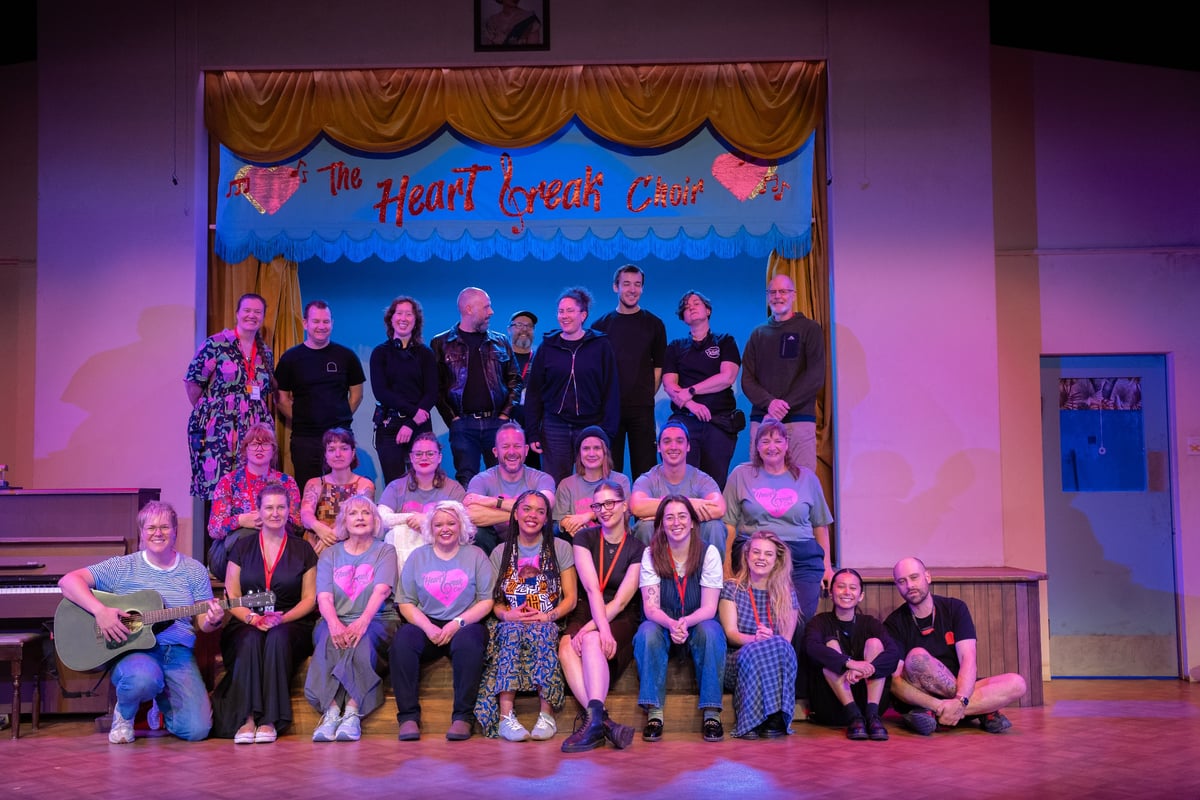
All of this said, director Shannon Rush and musical director Carol Young have managed to deliver a genuinely entertaining evening in the theatre. Rush works hard to clearly define the variety of characters while remaining dutiful to the original text, while Young’s musical contribution infuses the piece with great life and emotional substance. Among an ensemble of broadly experienced performers, it is also fabulous to see such a gifted newcomer in Lucia Rose Franks as Aseni, who holds her own with assured poise. Even though the play itself tends to bite off more than it can chew, it ends with a flourish and plenty of feel-good vibes. In keeping with previous productions in Melbourne and Sydney, a different local community choir joins the cast on stage for the final song at each performance, providing a magical wall-of-sound sensation right at the end of the play. It may be a flawed, uneven script that never quite reconciles its breezy comedy with its darker ambitions, yet the warmth of the ensemble and the genuine lift of that communal finale ensure audiences still leave the Dunstan Playhouse smiling.
In the end, The Heartbreak Choir might well have become a true masterpiece were it not for a set of tragic circumstances, much the same as can be said for every person touched by institutional abuse, or abuse of any kind. If the play encourages even one member of its audience to wholeheartedly support someone brave enough to share their experience of abuse, and help connect them with the right resources, it will have achieved the greatest impact possible.
Rating: ★★★★½ (4.5 out of 5 stars)
Reviewed by David Jobling
State Theatre Company South Australia’s production of The Heartbreak Choir runs at the Dunstan Playhouse, Adelaide Festival Centre, until Saturday 5 December 2026.
Follow Fifty+SA on Instagram and Facebook, and subscribe to our weekly newsletter.