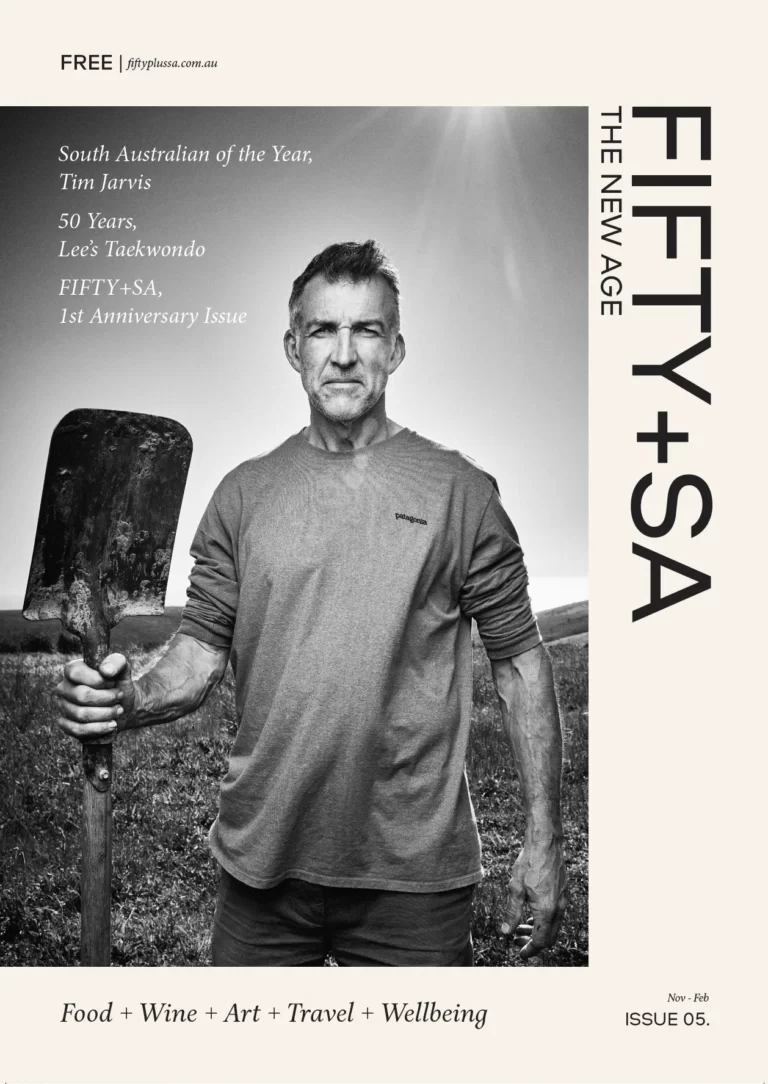

‘Living only for the moment, savouring the moon, the snow, the cherry blossoms and the maple leaves, singing songs, drinking sake, and diverting oneself just in floating, floating…’
So wrote Asai Ryoi in 1661, describing the pleasure-seeking culture that came to define Japan’s Edo period. From 30 January 2027, that world comes to Adelaide in an exhibition unlike anything shown in Australia before.
Floating Worlds: Prints from Osaka & Kyoto will be the first Australian exhibition dedicated to the woodblock print culture of the Kamigata region, the historical heart of Japan’s artistic and theatrical life. The Art Gallery of South Australia will present more than 200 works across three months, opening as part of the 2027 Adelaide Festival.

The floating world explained
The term ukiyo, or ‘floating world’, refers to the vibrant urban culture that flourished in Japan’s cities between 1603 and 1868. As the merchant classes grew prosperous, they sought escape from daily obligation in the theatres, teahouses and pleasure quarters of Osaka and Kyoto.
From these entertainment districts emerged ukiyo-e, or ‘pictures of the floating world’, a celebrated art form that captured the beauty, drama and enchantment of city life. Kabuki actors became legendary figures, their rivalries inspiring intense public devotion and a thriving trade in commissioned woodblock prints.
While Edo (present-day Tokyo) sustained Japan’s most prolific print industry, the Kamigata region cultivated something different: an exceptional aesthetic sensibility and supreme level of artistry that set its work apart.

A collection of international significance
The exhibition marks AGSA’s first major acquisition through the M.J.M. Carter AO Bequest, a transformational gift that has established the gallery as home to Australia’s most comprehensive collection of Kamigata prints, now considered on par with major collections around the world.
AGSA Director Jason Smith described the significance of the exhibition: ‘Floating Worlds will offer audiences in Adelaide and from across Australia a rare encounter with the captivating floating worlds of 17th to 19th century Osaka and Kyoto. These prints demonstrate an extraordinary level of craftsmanship and creativity.’
The exhibition will showcase works by more than ninety woodblock print artists rarely seen in this country. Among them is the pioneering Osaka-based artist Ryūkōsai Jokei (1776–1811), whose realistic depiction of kabuki actors’ faces set the standard for generations to follow.
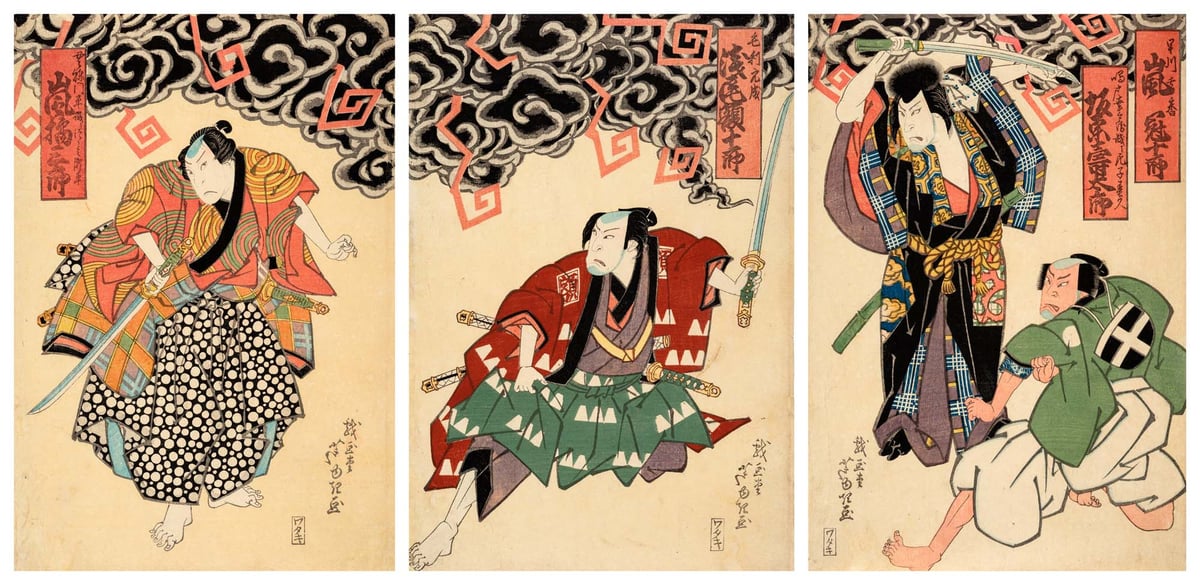
Other featured artists include Shunkōsai Hokushū, Shunbaisai Hokuei, Ryūsai Shigeharu and Hasegawa Sadanobu, who initiated the only true familial lineage of artists that continues to this day. Late nineteenth-century masters Utagawa Sadamasu and Gosōtei Hirosada also feature prominently.
Beyond the actors
While kabuki actors dominate the collection, Floating Worlds presents a broader view of Kamigata visual culture. Curator Russell Kelty, AGSA’s Curator of Asian Art, has assembled works depicting courtesans, sumo wrestlers, samurai heroism, landscapes and scenes from everyday life.
‘Floating Worlds seeks to reveal the beauty and sophistication of Kamigata ukiyo-e by offering a new vision of this artform,’ Kelty said. ‘Together these works reveal the breadth, complexity and dynamism of Kamigata visual culture.’
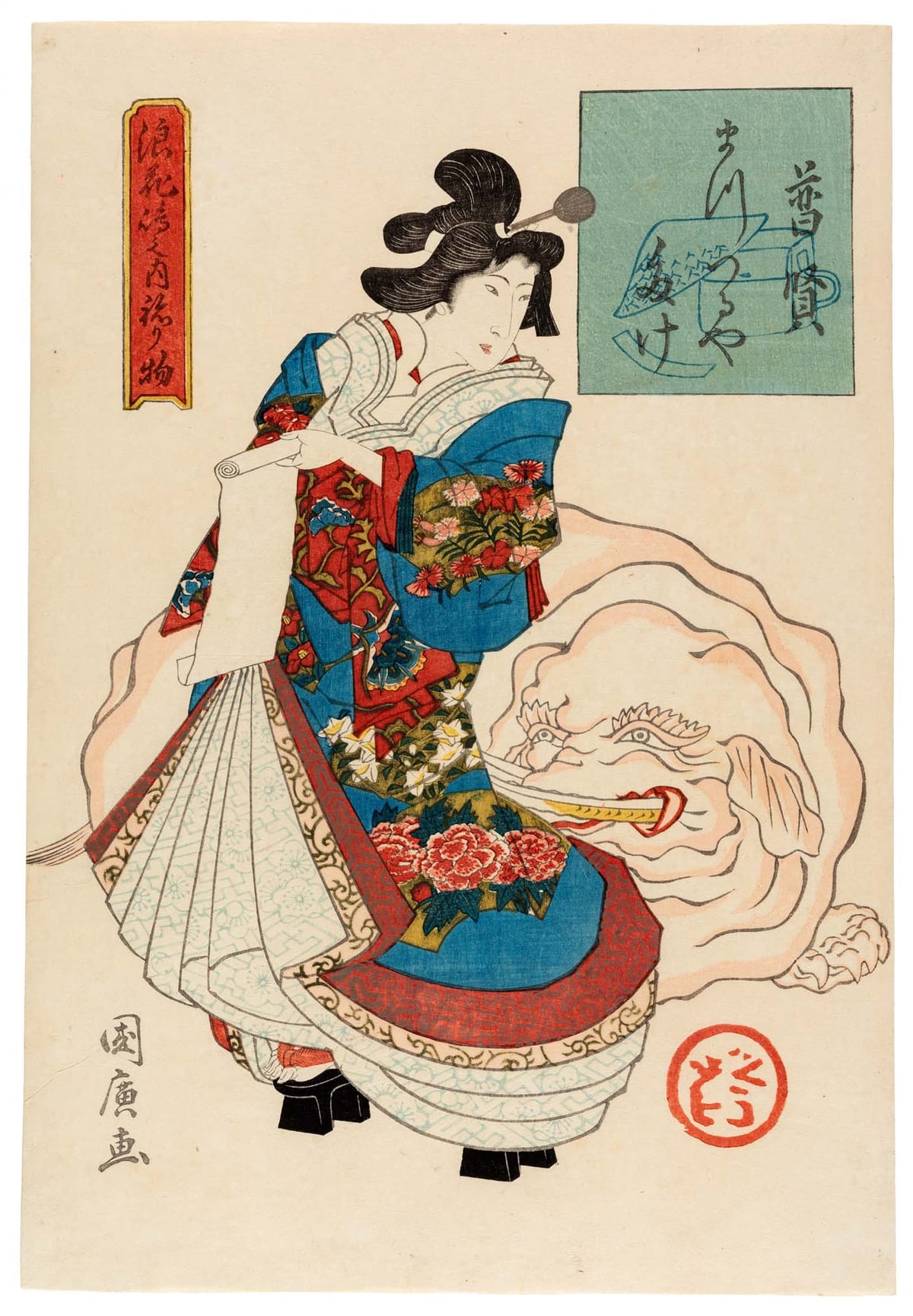
The exhibition will also include dramatic examples of samurai armour and finely crafted kimonos, revealing the artistic traditions, skills and cultural practices passed down through generations, many of which continue to shape Japanese society today.
Details
Floating Worlds: Prints from Osaka & Kyoto runs from 30 January to 18 April 2027 at the Art Gallery of South Australia. The exhibition forms part of the 2027 Adelaide Festival program and will be accompanied by a major publication and a season of public programs and events.
Tickets are on sale now at agsa.sa.gov.au.
Follow Fifty+SA on Instagram and Facebook, and subscribe to our weekly newsletter.