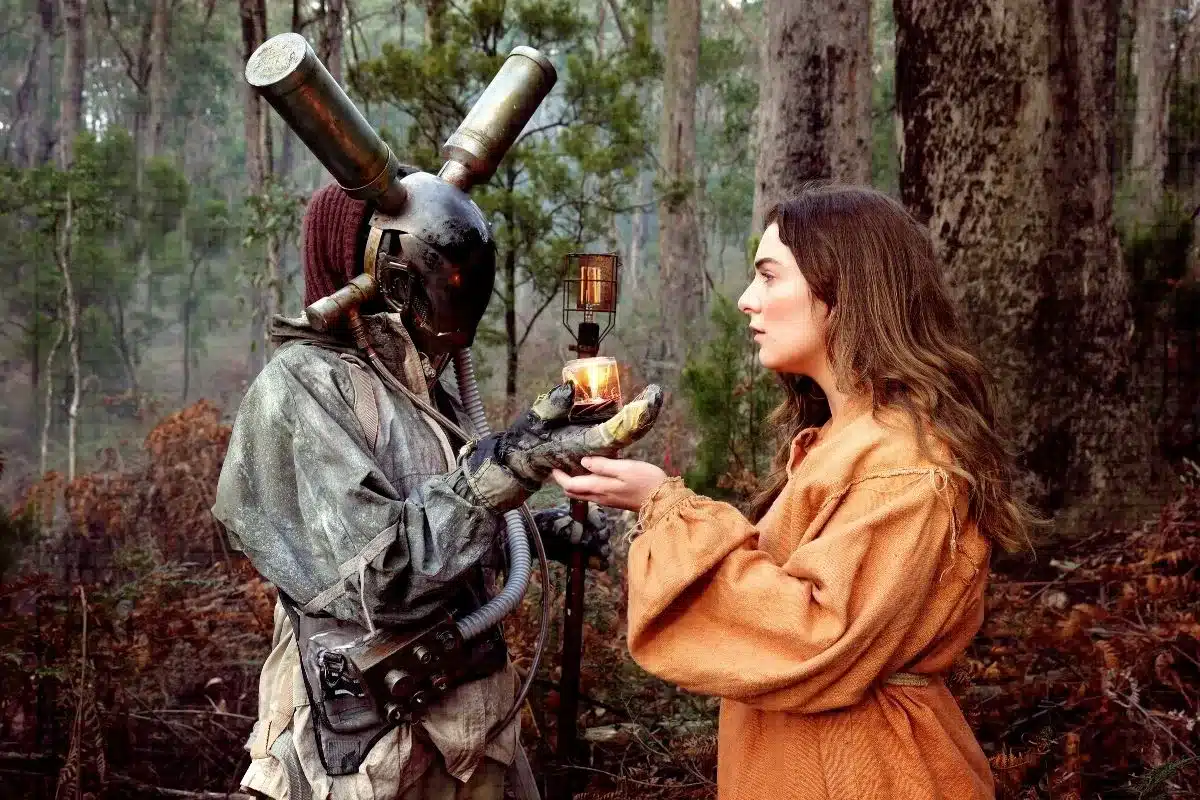
A Concise Compendium of Wonder: Technical Triumph Meets Narrative Distance
Theatre of this magnitude is often intentionally challenging, especially when designed for young people. In Slingsby’s farewell triptych, A Concise Compendium of Wonder, the deep melancholy and sense of isolation may be a bold act of provocation—a move that fits the company’s history. However, as the production takes its final bow at the Adelaide Botanic Garden, it presents a curious paradox: a company at the height of its technical powers delivering stories that feel held at arm’s length by a persistent narrative chill.
The first chapter, Jennifer Mills’ The Childhood of the World, proved the weakest. This Hansel and Gretel reimagining struggled with a laboured, third-person delivery that prioritised exposition over poetic resonance. The stilted language made it difficult to invest in the characters, a problem worsened by an early-season sound mix where Quincy Grant’s evocative music frequently drowned out the actors. Conversely, Ailsa Paterson’s set and Wendy Todd’s environmental design offered magnificent, intrinsically Australian touches – massive masks representing unique local animals that grounded these essentially European stories for a regional and international stage.
The experience found firmer ground with Ursula Dubosarsky’s The Giant’s Garden. Visually the strongest, it used rod-puppets and shadow play to create a storybook quality that compensated for the text’s lack of dimensionality. Yet, the shards of hope here are minute. By focusing exclusively on isolated female protagonists, the storytelling feels somewhat alienating, as if only one gender’s estrangement is deemed significant – a choice that feels more like a “woke” checkbox than a narrative necessity.
The final piece, Ceridwen Dovey’s The Tree of Light, pushes this trend into a futuristic moon-city. While the girl and her “shadow self” have a poetic quality, the delivery by Ren Williams, Elizabeth Hay, and Nathan O’Keefe remains distanced. Their “presentational” acting style – “the girl settled on the air conditioner because it was warm” – prevents the empathetic connection one seeks with a character. However, Chris Petridis’ lighting design reaches a magnificent climax here, transforming the venue itself into a character: an ancient Boab tree. The moment a door is flung open to reveal the real Botanic Garden provides a truly awe-inspiring spine-tingle, contrasting sharply with the cold, existential crisis of the moon-dwellers inside.
Ultimately, while the Wandering Hall of Possibility is a marvel of intimate design, the repetitive third-person structure leaves the audience as observers rather than participants. It is troubling that the work is so depressingly sad; theatre thrives on a mixture of comedy and tragedy, and an audience needs to feel they are on a journey with recognisable characters.
This season marks the significant end of a chapter, but it is clear a new one is soon to be writ. Despite the conclusion of their Creative Australia triennial funding, Slingsby has cleverly set itself up for more to come through fundraising and sponsorship. The Wandering Hall of Possibility will travel to Whyalla in June, ensuring this work is shared with the regional audiences central to the company’s story. It is a transition into a new period of the company’s life, marked by a purpose-built venue and a strong will to keep touring.
Rating: four stars!
Show Details
Director: Andy Packer
Composer: Quincy Grant
Designers: Ailsa Paterson (Set/Costume), Wendy Todd (Environment), Chris Petridis (Lighting)
Performers: Ren Williams, Elizabeth Hay, Nathan O’Keefe
Season: Until 15 March (Adelaide Festival); Touring to Whyalla in June.
For more information about the production, visit slingsby.net.au/a-concise-compendium-of-wonder/