
Ba-boom, ba-boom, ba-boom
When you were younger you were probably living for the moment, not the future. Decades on, you may be paying the price … and you might not even know it yet.
Australia’s biggest killer builds up quietly over time, is hard to detect and can strike without warning.
It’s called atherosclerosis – a build-up of fatty plaque in the arteries causing them to narrow and harden. Never heard of it? Perhaps you’ve heard of coronary heart disease, dementia and stroke. They’re the trio responsible for taking the lives of some 50,000 Australians a year. Atherosclerosis is a common factor in them all.

A beating heart and a ticking time bomb can sound the same.
Your heart is a pump that moves the blood that keeps you alive, but like any pump it can only work if the pipes – your arteries – are clear of obstruction.
As the pipes gradually block, it’s the equivalent of a ticking bomb, with no idea when it might go off.
The bad news is if you’re over 50 you’re probably living with some degree of atherosclerosis right now.
The good news is the brilliant scientists at SAHMRI have developed interventions to stop and even remove this arterial sludge.
An incredibly promising example is the development of a nanoparticle that is so small, you could fit an astonishing 250 billion on a single pinhead.
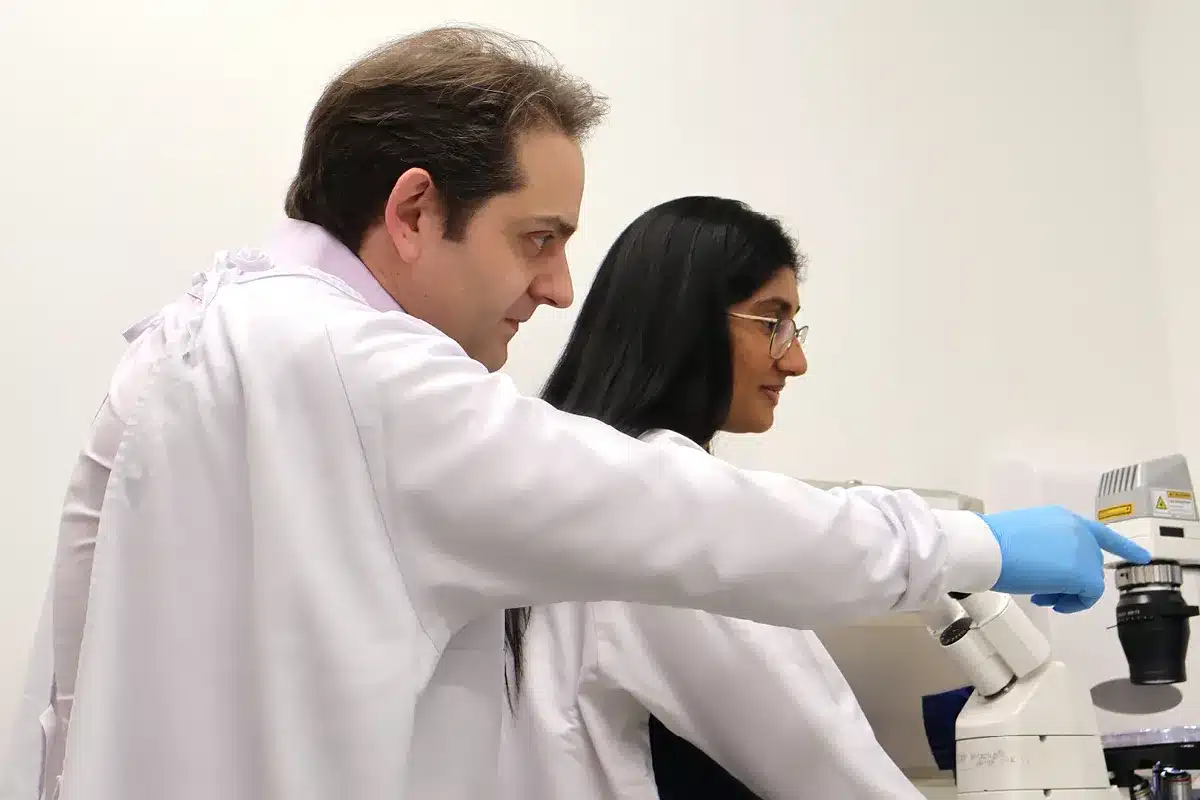
Small enough to travel arteries with ease, it can be programmed to find plaque, suck out harmful fatty cells and transport them to the liver for processing.
The benefits don’t end there. It can also act as a tiny courier, capable of being loaded with genetic material that knocks down plaque-forming proteins, or drugs for targeted delivery, thereby reducing unwanted side effects. It also has powerful imaging capabilities and can be tracked through the body to identify areas of concern.
In essence, this one miniscule particle can detect problems, deliver treatment and remove detritus.
And that’s just one of many advances SAHMRI’s dedicated researchers are making against this insidious disease.
Another is the world-first discovery of a cell type that’s entirely new to science.
For more than a century scientists have theorised there must be something in us to explain why some wounds were incredibly slow to repair, yet some cancers grew at great speed.
After nearly a decade of diligent research, Professor Peter Psaltis and his team have found it.
They’ve called this cell the EndoMac progenitor. It’s a stem cell that possesses the unique ability to develop into two distinct types of cells: endothelial cells that form blood vessels, and macrophages responsible for immune defence and tissue repair.
It has the potential to tackle fatty plaques in arteries, speed the repair of chronic wounds, and stymie the exponential growth of cancers.
This kind of research is complex and costly – but nowhere near as costly as a heart attack.
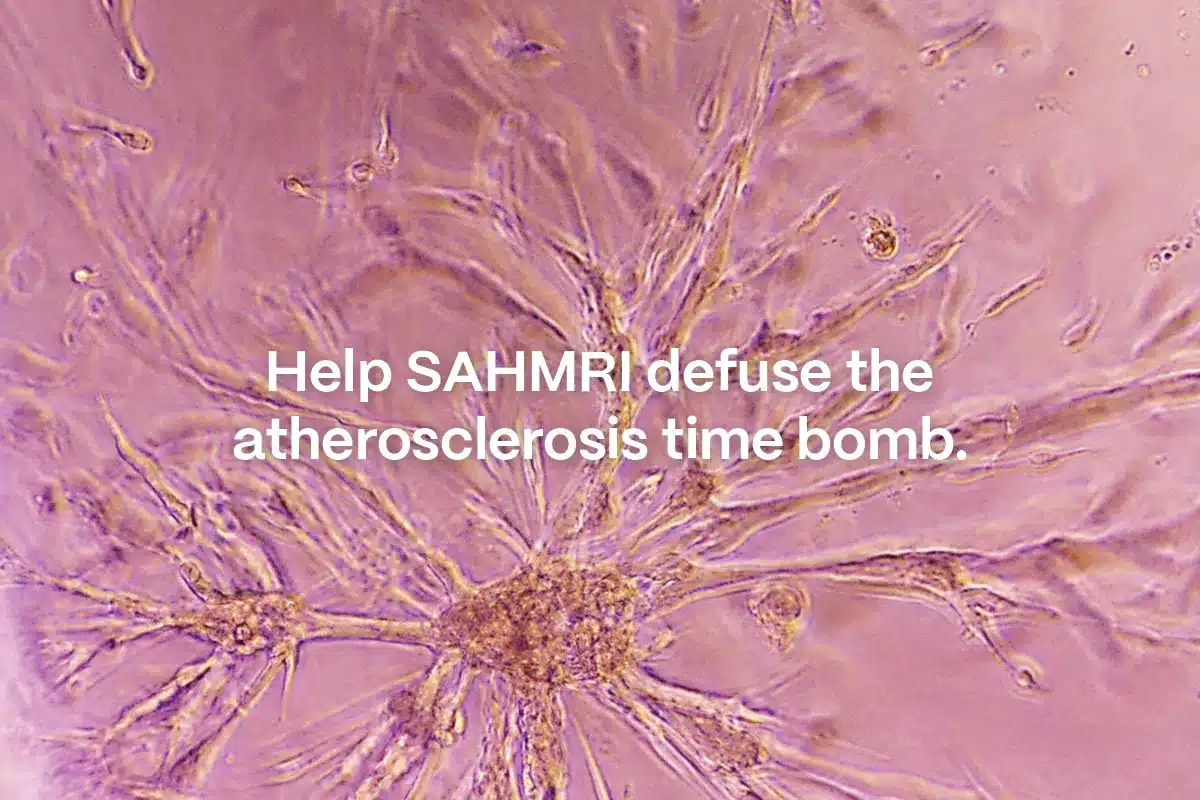
Help SAHMRI defuse the atherosclerosis time bomb.
SAHMRI is at the forefront of efforts to stop Australia’s biggest killer in its tracks. But we can’t do it alone.
As a not-for-profit institute, SAHMRI relies on donor support to realise its potential. We need your help to get these discoveries out of the lab and into the community.
Whether it’s a one-off donation or an ongoing contribution, a gift in memoriam or a bequest in one’s Will, every dollar brings us a step closer to creating longer healthier lives.
Find out more or to make a donation, visit: sahmri.org