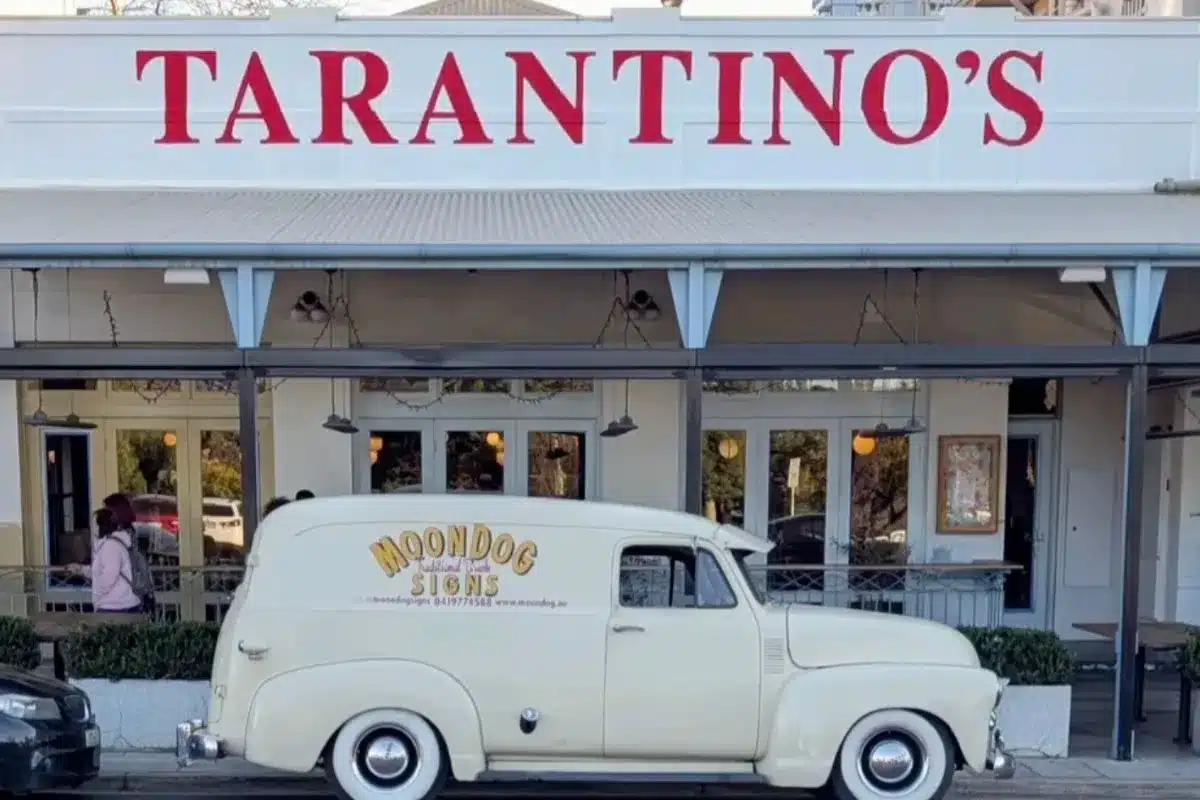
In a city increasingly wallpapered with vinyl decals and digitally printed everything, Raymond P. MoonDog is a deliberate act of resistance.
For over three decades, this Adelaide signwriter has been doing things the old way, brush in hand, paint on surface, no shortcuts, and the city is richer for it. From the Garden of Unearthly Delights to the shopfronts and bars anchoring Adelaide’s inner suburbs, his work is everywhere once you know what to look for. Now, with a new generation turning up to his workshops hungry to learn a craft that TAFE stopped teaching, Raymond reflects on a life spent making letters by hand… and why that will always matter.
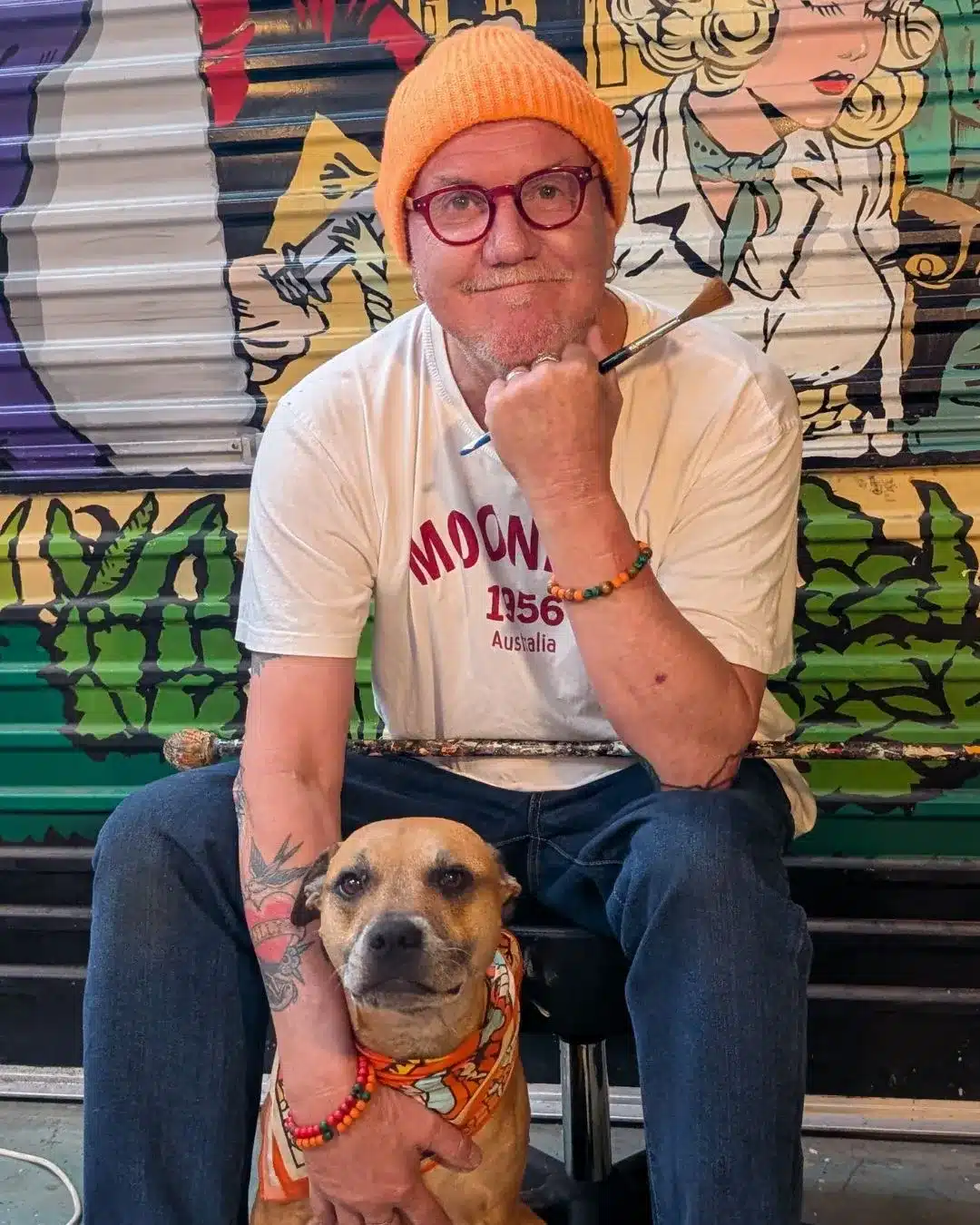
How did you first fall in love with signwriting, and what drew you to the old-school brush-and-paint approach?
I finished Year 12 at Norwood High School, English and Art were my strengths, but Maths, Biology and Science simply weren’t my gig. I didn’t have enough points to enter the art school on Stanley Street in North Adelaide, so when an apprenticeship in brush signwriting came up, I applied and was successful. My career began at the Highways Department and then moved into coach painting – the old Bay Tram – where I spent 32 years.
In a world of vinyl and digital printing, why was it important to keep traditional signwriting alive?
I’ve always believed there’s something more organic about creating a letter by brush rather than plotter or digital print. I also knew no other method, and I refused to become part of a new technological culture.
What does hand-painted lettering offer that a computer simply can’t?
Creativity, longevity and a touch of personalisation are key components. For me, young people today are only as creative as the strength of their software – and that’s a sad indictment on uniqueness.
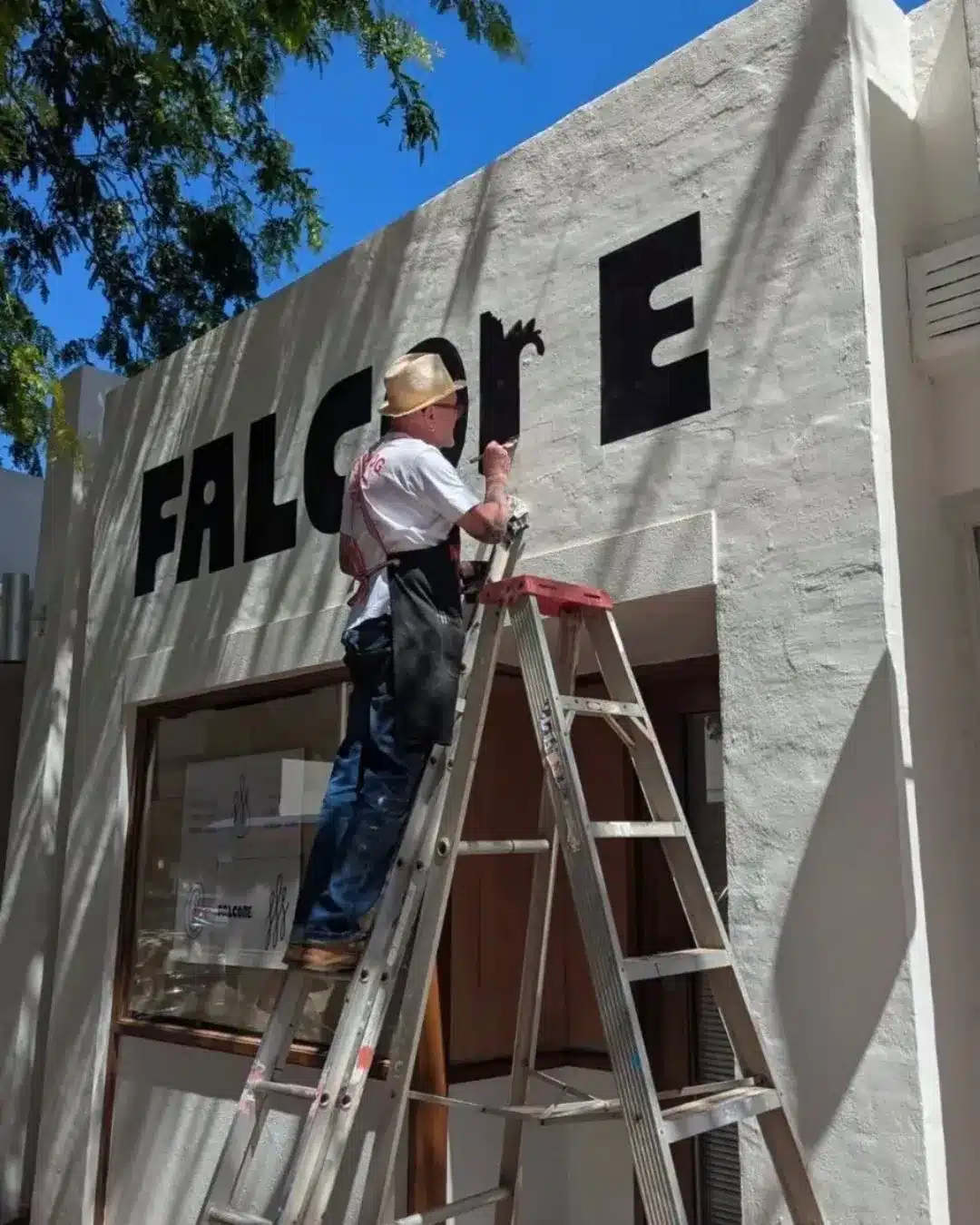
Walk us through your process. From the first conversation with a client to the final brushstroke.
Every commission has its own qualities. Some clients arrive with a PDF and no desire for variation. Others hand it entirely over to me to create a font, image or livery based on their business concept, and honestly, that often works best. Each job varies in materials too, whether that’s gold leaf, enamel or acrylic.
Every job is done by hand. What kind of patience and skill does that demand?
Ha! I’m not a patient person by nature, but I’ve learned to be. Quality demands it, and that’s pretty much every job. Rushing a piece that deserves three hours into one does no justice to your soul or your client.
Do you plan every detail before you start, or is there room for instinct once the brush hits the surface?
I’m awake at 3am every day, not by choice. Planning, strategising, working through colour and layout in my head before the sun comes up. By the time I get to the job, I usually know exactly what needs to happen. Please, hand me a strong coffee.
You’ve worked across shopfronts, vehicles and walls across Adelaide. How would you describe the local appetite for traditional signage?
The renaissance for traditional brush signwriting cannot be overstated. Fortuitously, my client base is discerning. One way or another, they find me. There’s a digital printer on every street corner producing the same output, cheaper and faster, following corporate briefs. That’s not for me.
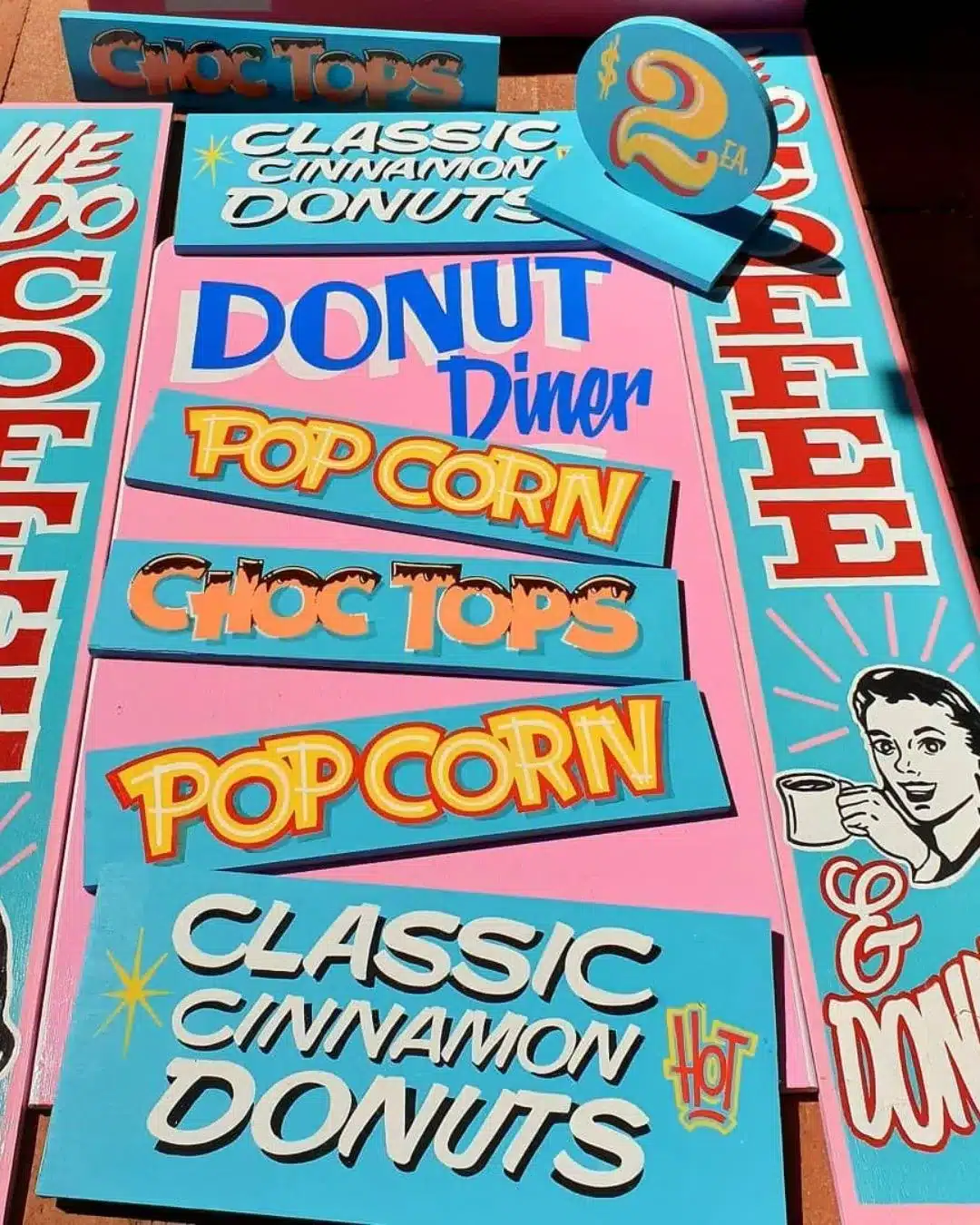
What’s been one of your most memorable Adelaide projects?
Too many to list and I’ve genuinely enjoyed them all. I’ve done much work for the Garden of Unearthly Delights, the Poffertjes Carousel, the Adelaide Festival’s Wandering Hall of Possibility, and several renowned tattoo studios, House of Daggers and Sure Thing among them. Tarantino’s Italian Restaurant gets me the most attention; it’s bold and faces the East Parklands. Septimus Wine Bar, Falcone Pizza, Three Valley Gin, West Palms Studio and Deano’s Barber Shop are a few more that come to mind.
Do you think hand-painted signage adds something special to a neighbourhood?
Absolutely. Back in the day, whether you were a butcher, baker or candlestick maker, the layout, colour and lettering of your shopfront told a customer something about the worthiness of your trade. That still holds.
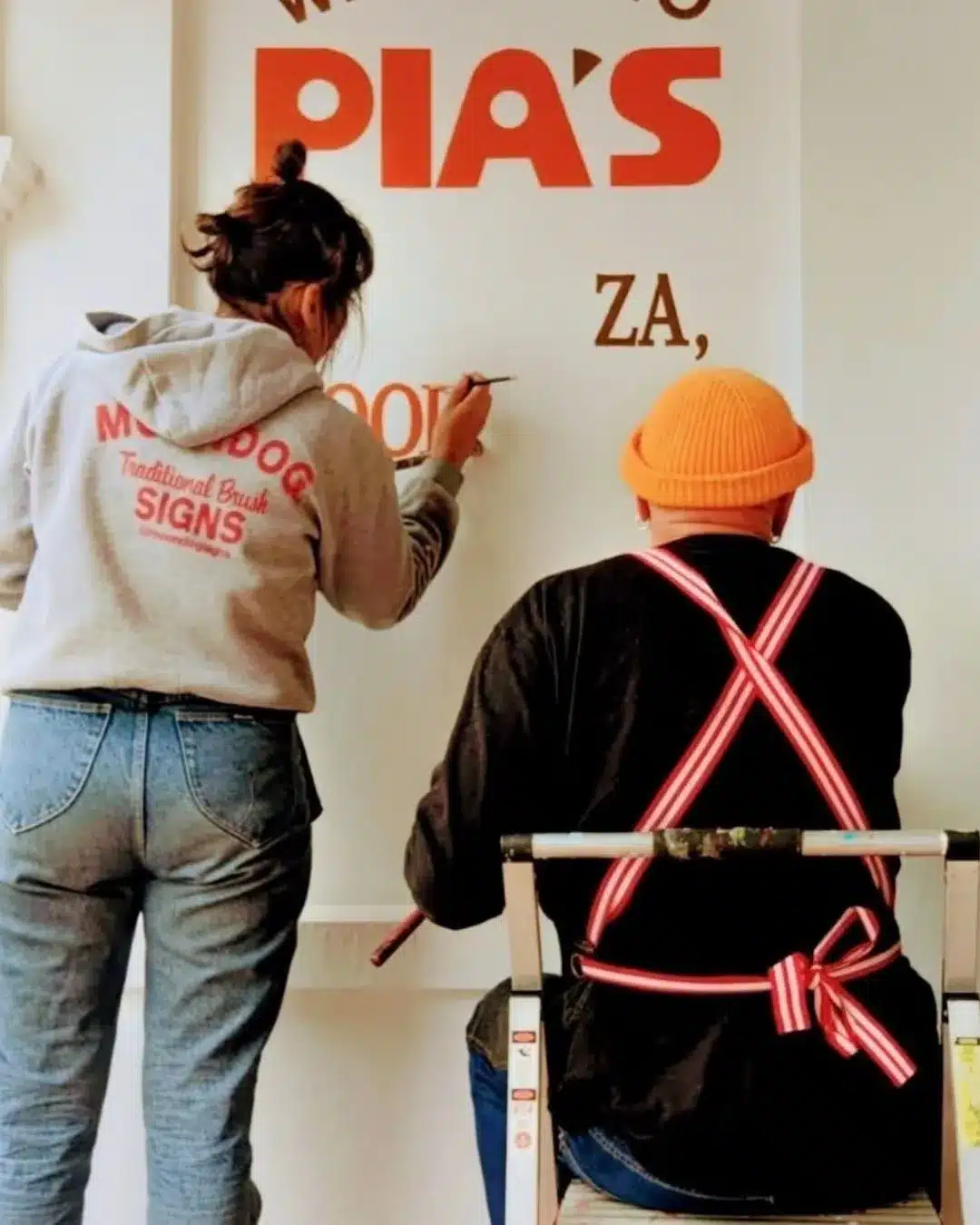
Is there a particular style you love most?
I enjoy scripts of various styles, and I make a point of never being cornered into one look that’s immediately identifiable as “MoonDog’s work.” Right now I’m very happy with my bevelled lettering – three-dimensional, deeply satisfying to execute – and my freestyle bamboo lettering. Mastering these has been everything.
“Rushing a piece that deserves three hours into one does no justice to your soul or your client.”
“Back in the day, whether you were a butcher, baker or candlestick maker, the layout, colour and lettering of your shopfront told a customer something about the worthiness of your trade. That still holds.”
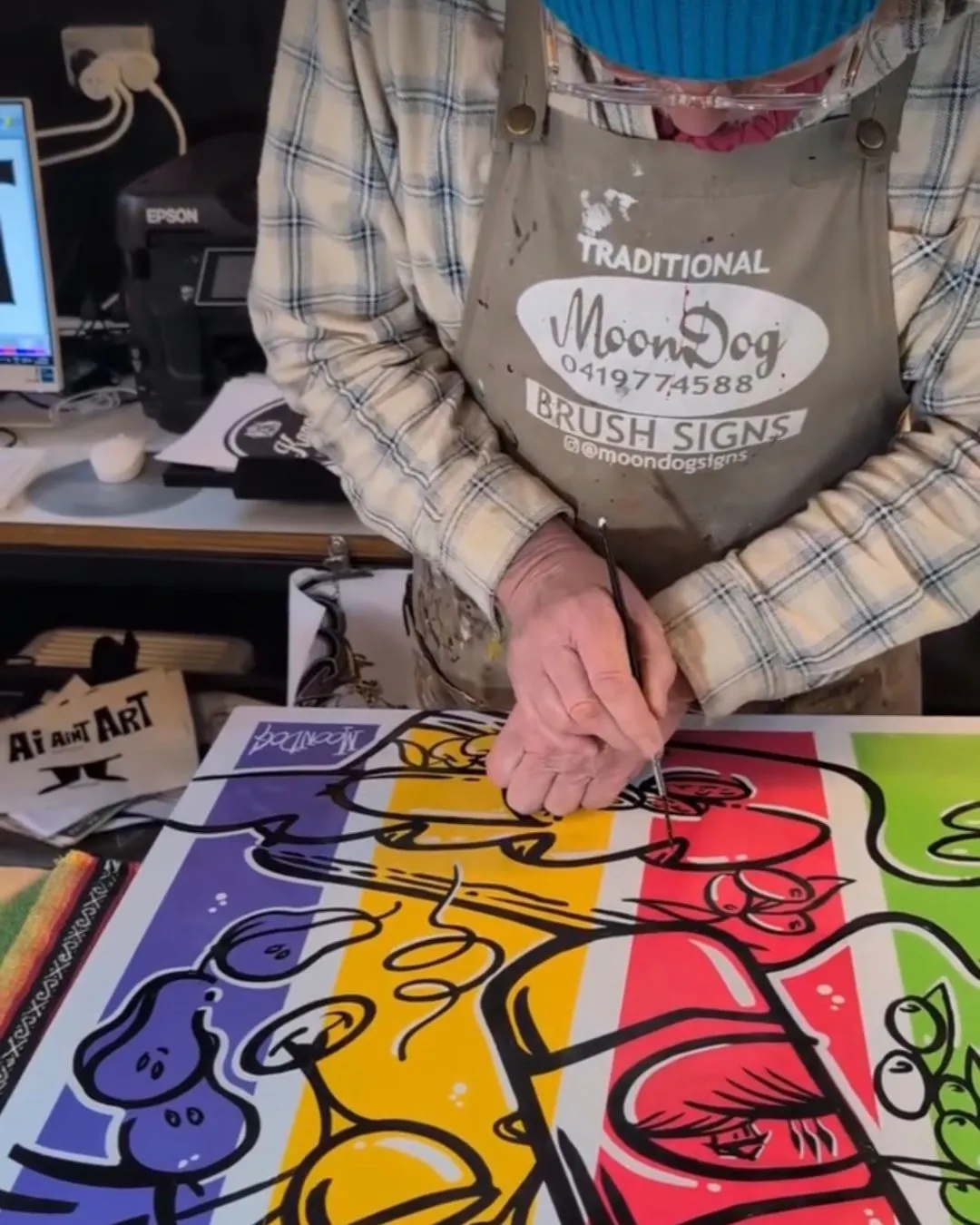
You run brush sign workshops. What made you decide to start teaching?
You can no longer go to TAFE and learn traditional brush signwriting. I recognised that void; this tuition was happening elsewhere in the world but not here. My first class was 12 years ago. I love imparting knowledge, and practically speaking, the only people I can employ when I get busy are the students I’ve trained myself. I’m fortunate to have Natalie, who stood out from the crowd over the years and is now my senior assistant.
Why do you think there’s renewed interest in slow, hands-on skills like this?
Sooner or later, there must be a return to more creative, handcrafted and organic methods. I’ll leave the last word to a quote I admire, from Ivan Castro and Ken Barber:
“The prevailing master-apprentice paradigm began to erode in the 1980s and 90s as attention turned to digital typography. Largely inexperienced computer users could now compose their own text; a job previously the domain of experts. Although the latest devices and software offered tremendous freedom, the general public lacked the ability to discern good work from bad.”
See more work:
moondog.net.au | @moondogsigns