
Ten years ago, finding out what was going on inside your body meant a symptom and a trip to the GP. Now you can measure almost anything: how dense your bones are, how much muscle you’re carrying, even how old your blood thinks you are.
That’s a remarkable amount to be able to know about yourself. The useful part is knowing where to begin.
Start here: bone density
What it is. A DEXA scan measures the mineral density of your hip and lower spine. It takes about fifteen minutes. You lie on a padded table, fully clothed, while a scanning arm passes slowly over you – no needle, no dye, no tunnel, and a radiation dose roughly equivalent to a single day of ordinary background exposure. There’s nothing to prepare for and nothing to recover from. You get up and drive home.

What comes back is a T-score: a number comparing your bone density against a healthy young adult. Above -1.0 is normal. Between -1.0 and -2.5 is osteopenia, the early thinning stage. Below -2.5 is osteoporosis.
What it tells you. Whether your bones are thinning, and how fast. This matters because bone loss is an undramatic process. It produces no ache, no stiffness, no signal you could reasonably be expected to notice, and it continues steadily through your fifties and sixties while you feel perfectly well. For many people the first indication is a fracture – a wrist after a stumble on a kerb, a vertebra that compresses while lifting a suitcase into a boot.
A single scan tells you where you stand. Two, a few years apart, tell you the direction you’re heading, which is often the more useful information.
What it costs. Bulk billed if you meet the Medicare criteria, around $105 if you don’t. A GP referral is all that’s required – you don’t need to see a specialist first.
Why it’s first. Longer evidence base than anything else here, and the clearest set of next steps: weightbearing exercise, adequate calcium and vitamin D, and for some people, medication that keeps a fracture from ever happening.
Worth considering: body composition
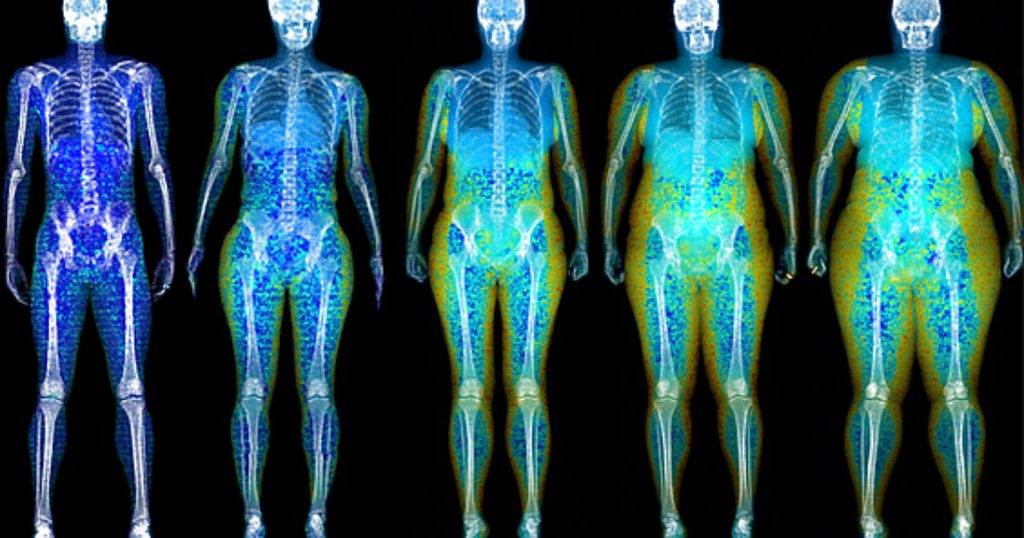
What it is. The same machines run a total body scan that separates lean mass from fat mass and locates visceral fat – the deep abdominal kind that surrounds the organs and behaves quite differently from the fat you can pinch.
What it tells you. Something the bathroom scales cannot. Muscle mass declines gradually from midlife, and it’s possible to hold the same weight for a decade while the ratio underneath shifts. Nothing in the mirror would tell you.
What it costs. $115 at Adelaide BodyScan, also available at Radiology SA in Parkside. No Medicare rebate applies, so it’s out of pocket wherever you have it done.
Who it’s for. Anyone who has taken up resistance training, which is now fairly standard advice after 50. A scan today and another in twelve months gives you a figure rather than an impression.
Interesting, but early: biological age
What it is. A score estimating how your body is tracking against the calendar. The i-screen test runs nine routine blood markers – albumin, glucose and C-reactive protein among them – through a scoring system called phenotypic age. Everlab takes a broader approach, pairing telehealth consultations with in-person testing at partner labs around Adelaide.
What it tells you. Less than the marketing suggests, and more than nothing. Phenotypic age was built from United States national health survey data and validated against mortality in a second cohort of more than eleven thousand people. Across large populations these measures carry real signals.
What researchers are still working out is how much they add for an individual. In the original validation, phenotypic age improved on chronological age by a couple of percentage points. A 2025 comparison of fourteen different clocks found the gains over standard clinical risk factors varied widely by disease, and reproducibility studies note that readings shift with a recent meal or a stressful week.
What it costs. i-screen is $59 on promotion, $99 otherwise, with an overnight fast and a visit to a collection centre. Everlab starts at $299 for an onboarding assessment, with programs from $1,199 to $2,999.
The catch. The value may lie less in the headline number than in the markers behind it – inflammation, glucose control, kidney and liver function are all things your GP can order, track over time, and read alongside everything else in your file.
Where to start
Make it the conversation. Ask your GP about bone density: whether you qualify for the rebate, and what your own history suggests about timing.
The rest is a growing field and an interesting one to follow. A number on a page is a starting point rather than a verdict, and wanting to know where you stand is a reasonable instinct at any age.
Follow Fifty+SA on Instagram and Facebook, and subscribe to our weekly newsletter.