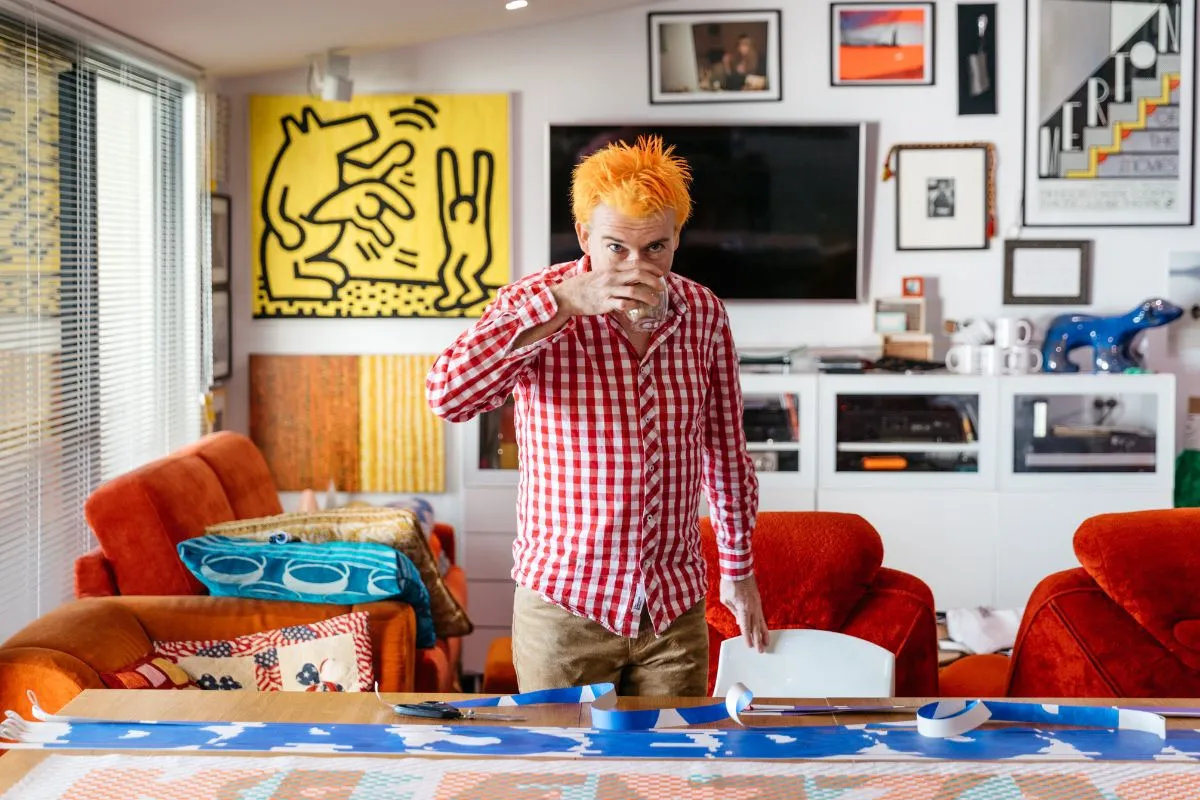
Troy-Anthony Baylis has been making art for more than three decades, work that sits at the intersection of identity, culture and lived experience. As this year’s SALA Feature Artist, the queer-Aboriginal artist brings a practice shaped by complexity, humour and a hard-won sense of self. We caught up with him ahead of the festival.
Can you tell us a bit about your practice and what inspires you?
I’ve been making art since 1993, mostly around socially constructed opposites and my actual reality of living as a queer-Aboriginal person of mixed appearances and geographies. As I’ve got older, I’m not only more comfortable in my own body, I’m more forgiving of people’s perceptions of me and the damage created when someone projects their own insecurities onto me. I’ve come to realise that my own complex and misunderstood background is my power; that although nuanced and specific, it is relatable. Most people know what it’s like, at some point, to feel different or like they don’t belong.

I’ve managed to channel these strengths into creating access points for people from multiple cultural perspectives. I know accessibility allows people to see deeper aspects of the work about complex ideas, from physical and psychological trauma, racism, sexism, homophobia, and sadness, to dark and seemingly self-deprecating humour and unbridled joy. On some level I think audiences can ultimately discover aspects of themselves in my work vicariously.
What do you hope audiences might discover in your work?
I hope audiences can appreciate my work on at least an aesthetic level. I mightn’t be the best at drawing, but I’m good with colour and design, and my knowledge of art and cultural histories is strong. I’ve managed to channel these strengths into creating access points for people from multiple cultural perspectives. I know accessibility allows people to see deeper aspects of the work about complex ideas, from physical and psychological trauma, racism, sexism, homophobia, and sadness, to dark and seemingly self-deprecating humour and unbridled joy. On some level I think audiences can ultimately discover aspects of themselves in my work vicariously.
Which album are you most likely to be listening to in the studio?
Probably Exile on Main St. by the Rolling Stones. It’s as if every song pays homage to a different sub-genre of black music from America’s south yet is completely its own thing. The Stones are on their A-game throughout, with backing singers and multi-instrumentalists to boot.
Learn more about Troy-Anthony Baylis and where to view his work this August at salafestival.com/feature-artist